The Last days of a forgotten giant
Original press and delivery photos courtesy of FotoArchivNeoplan
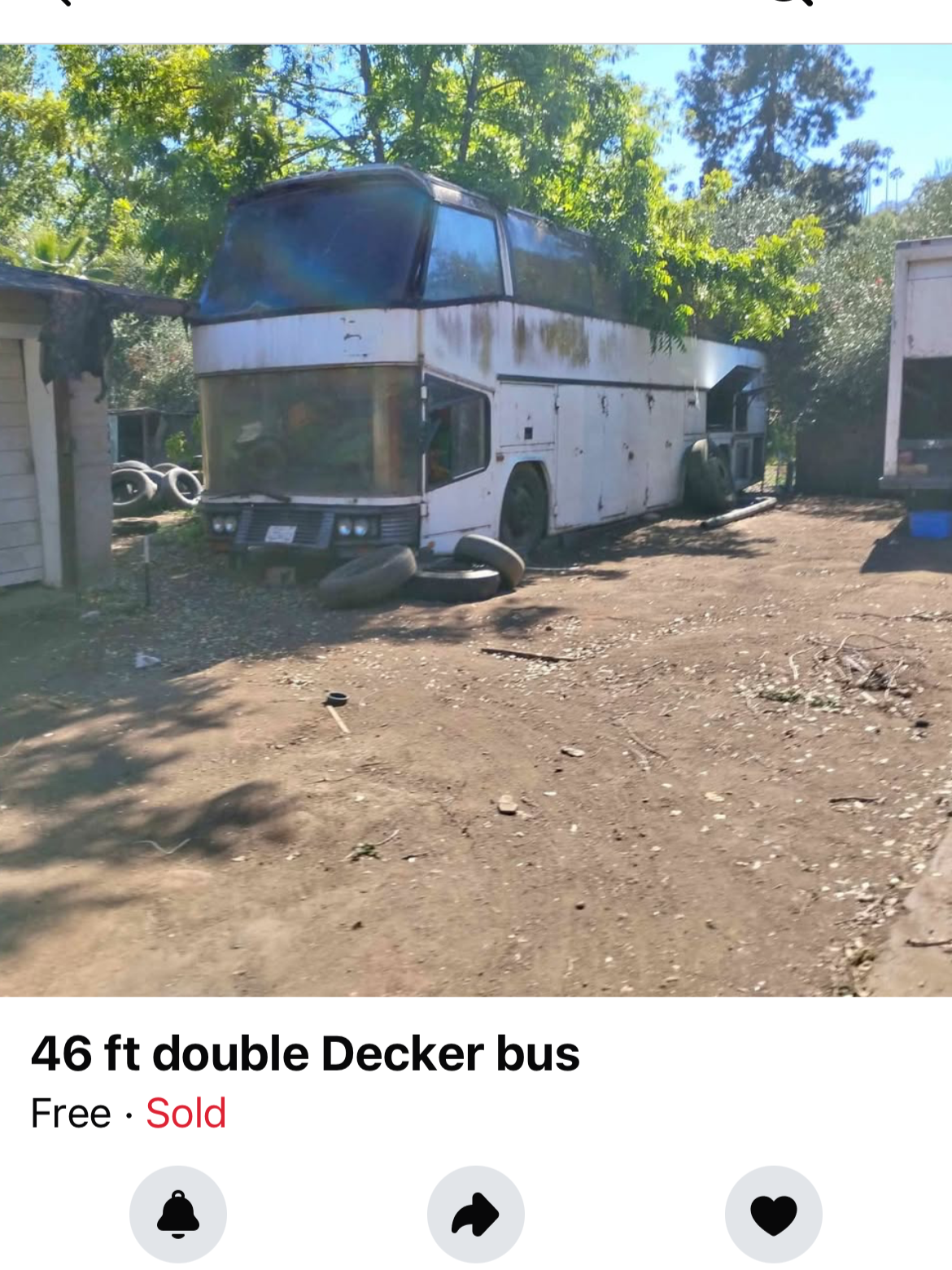
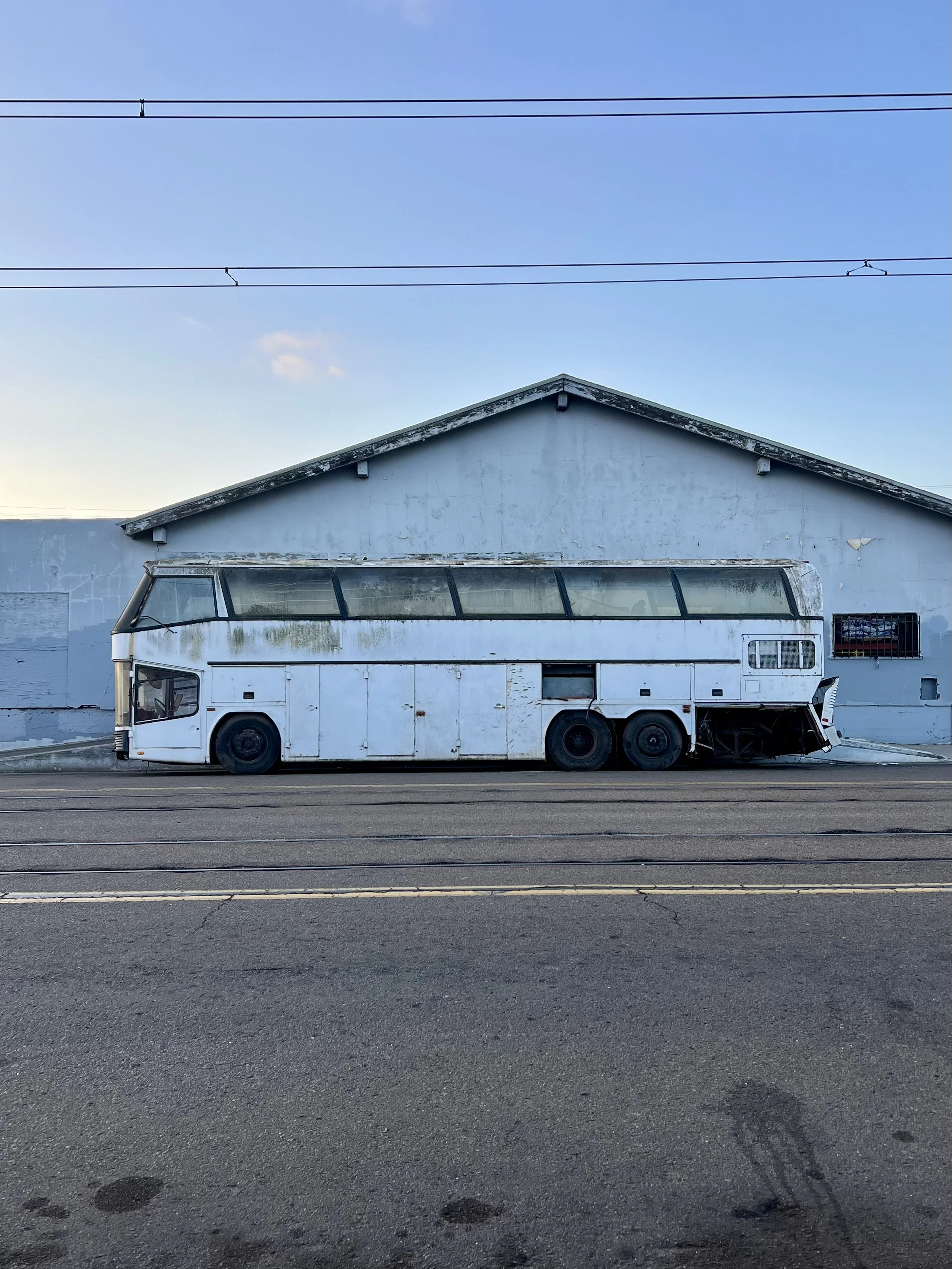
They say nothing good happens after midnight, and Facebook Marketplace is no exception. During some late-night browsing, I stopped scrolling when what looked to be a massive double-decker bus, later determined to be a custom-ordered 1982 NEOPLAN Spaceliner, grabbed my attention. It was halfway swallowed by the earth, and free to anyone capable of extracting it. Even if I somehow managed to yank it out and dump it in front of my house, I’d bet even my friendliest neighbors would do more than just roll their eyes this time. With this in mind, I shared it with a handful of people who have the misfortune of receiving my Marketplace finds on a regular basis, then proceeded to drift off loosely clutching my phone. It would be months before I saw the coach again, and when I did, its setting made the encounter unforgettable.
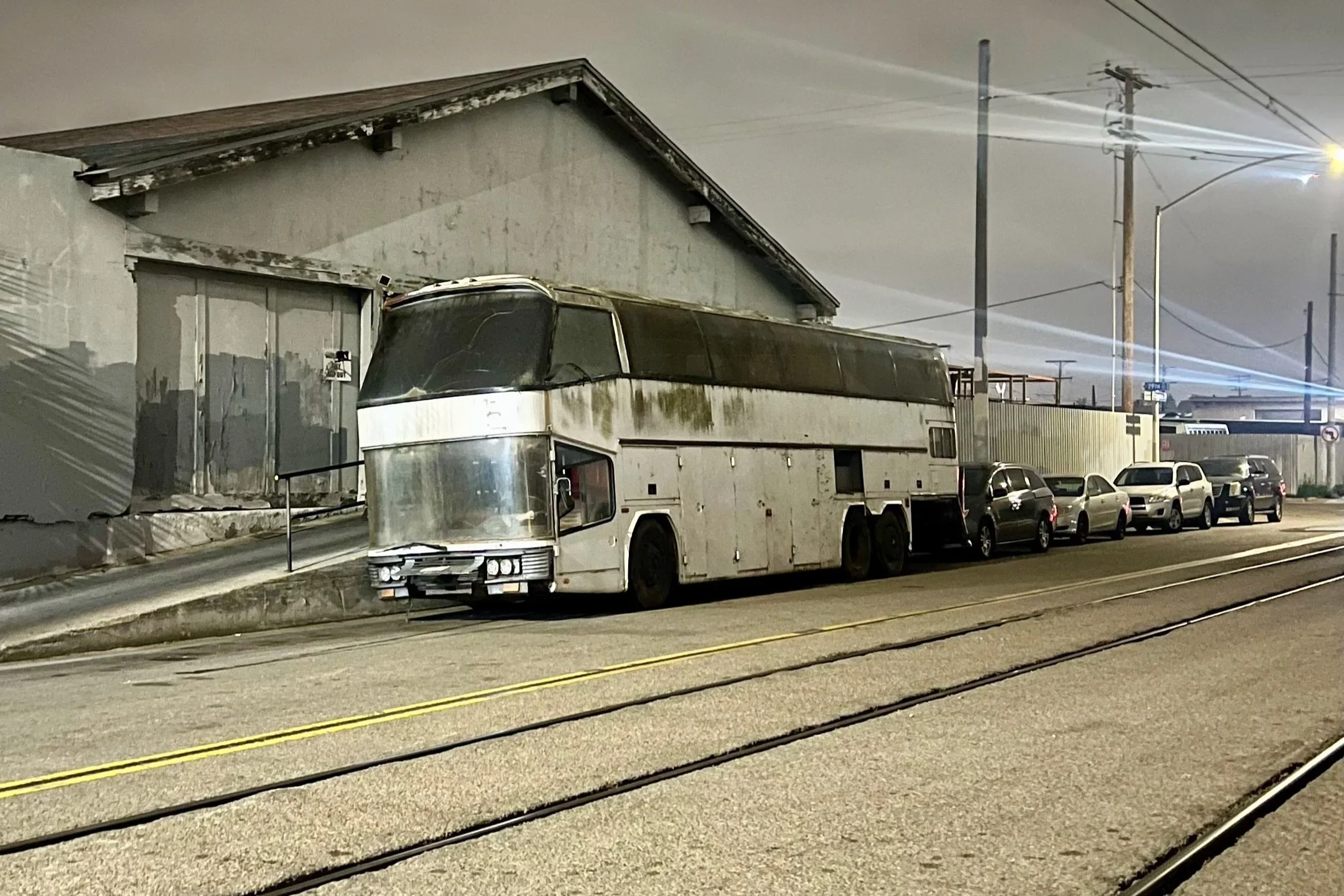
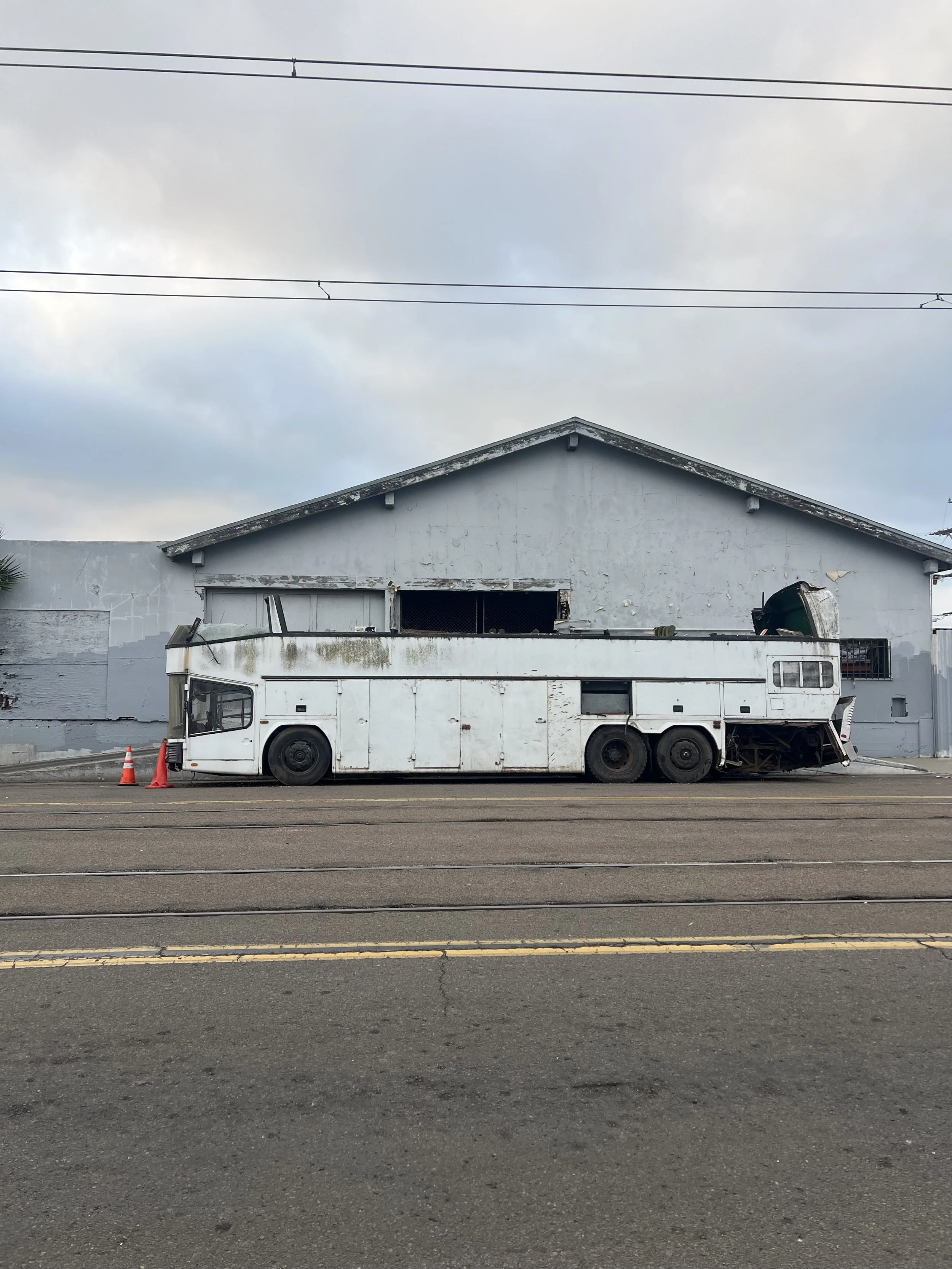
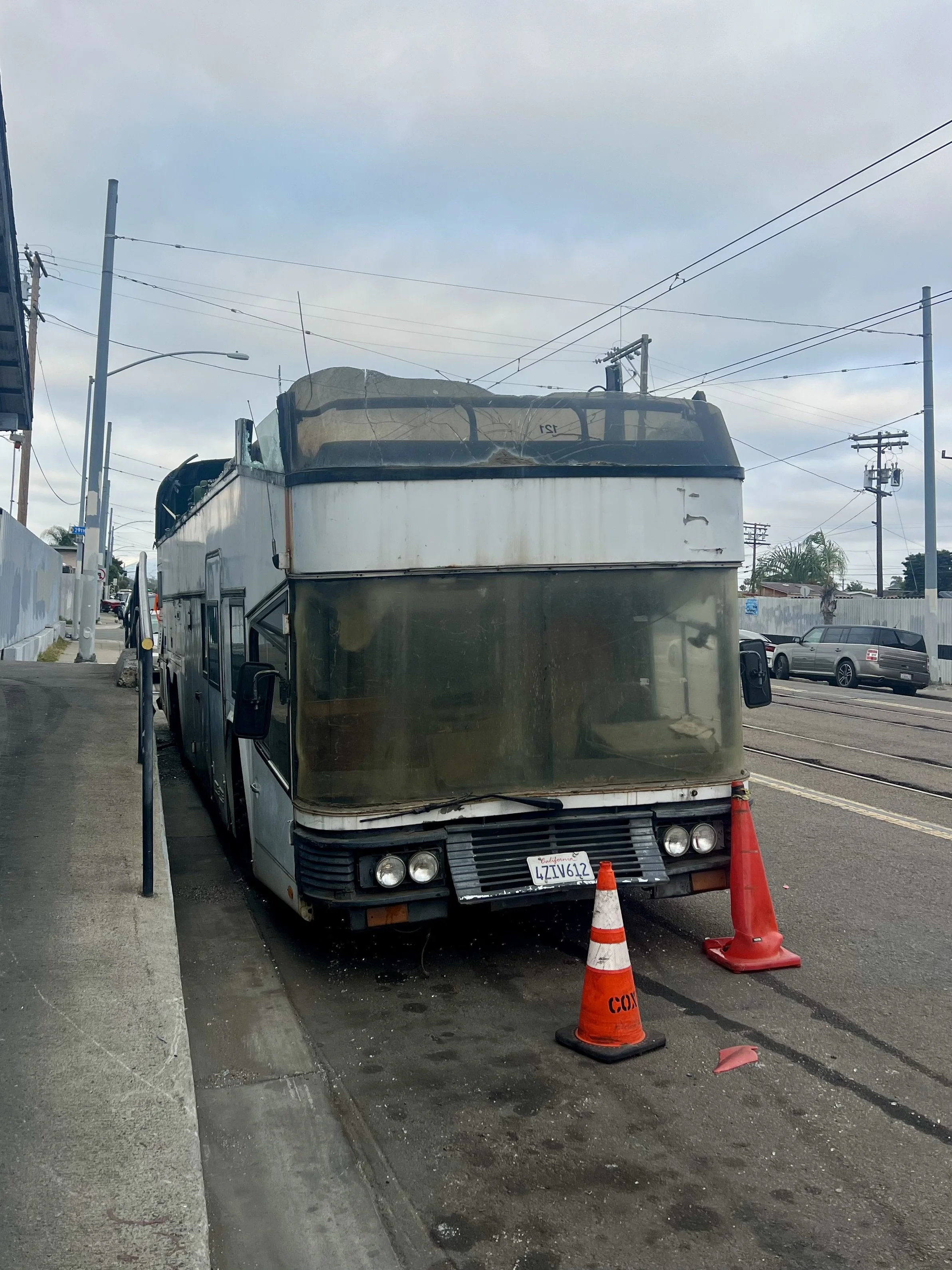
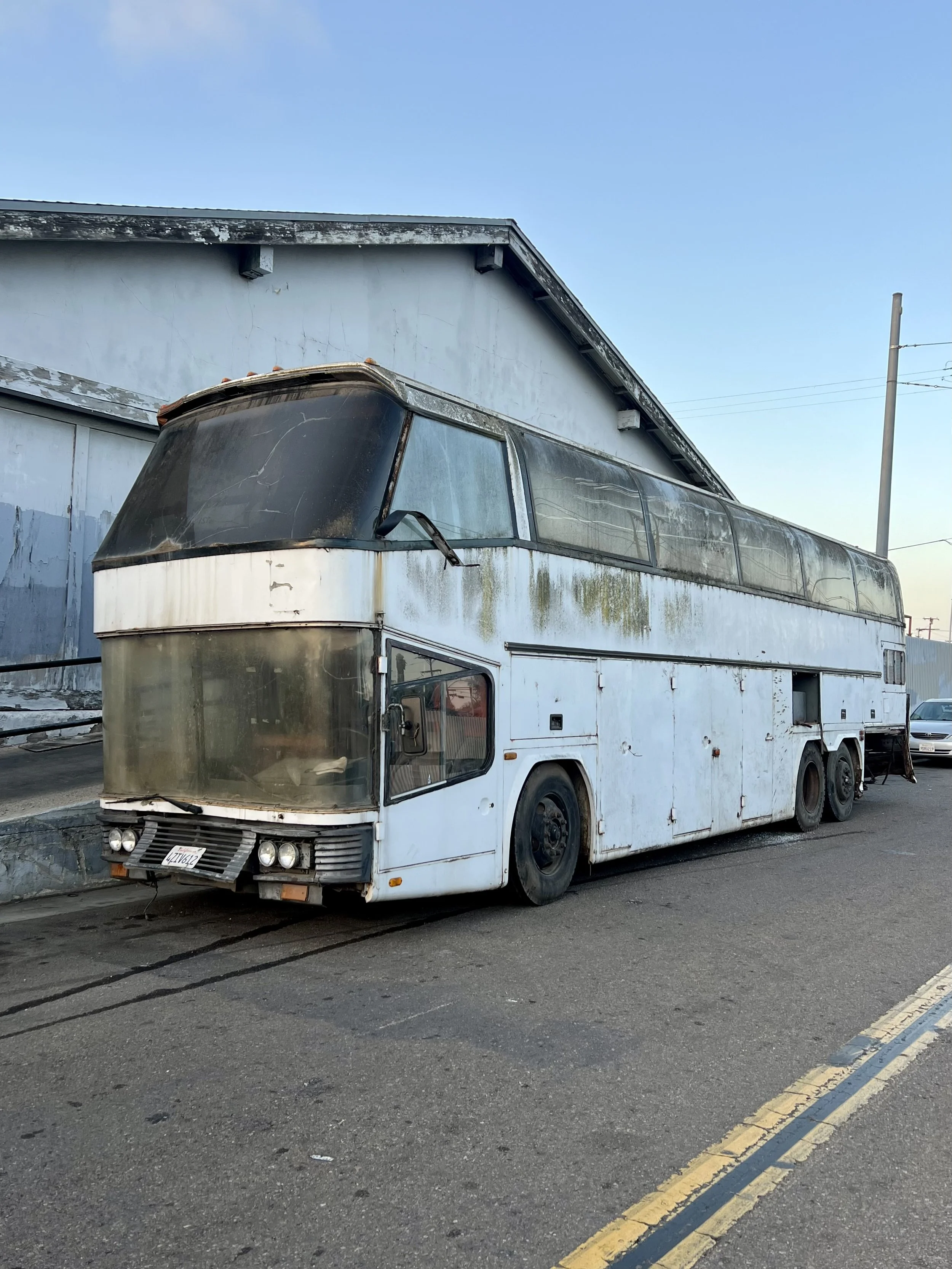
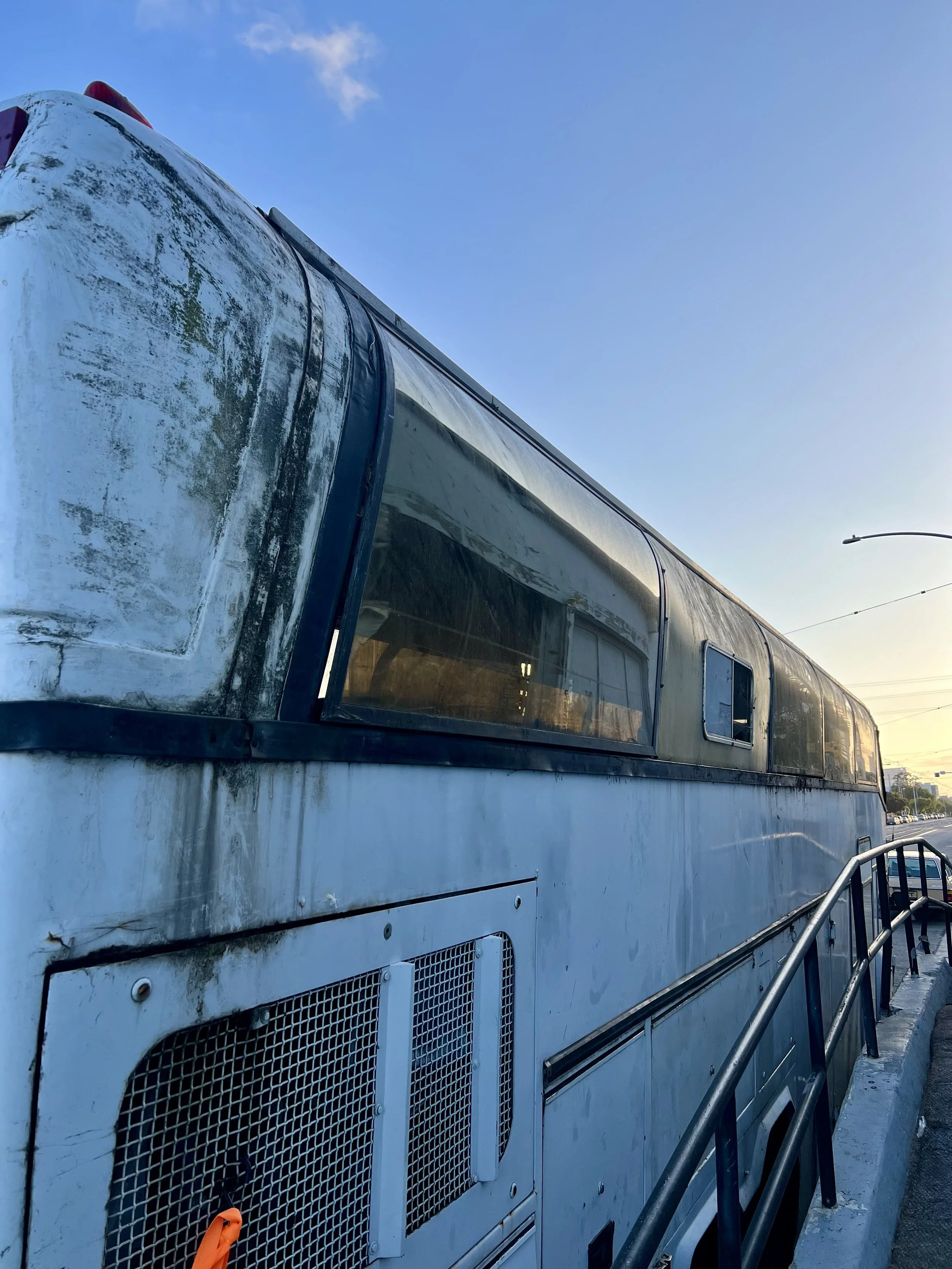
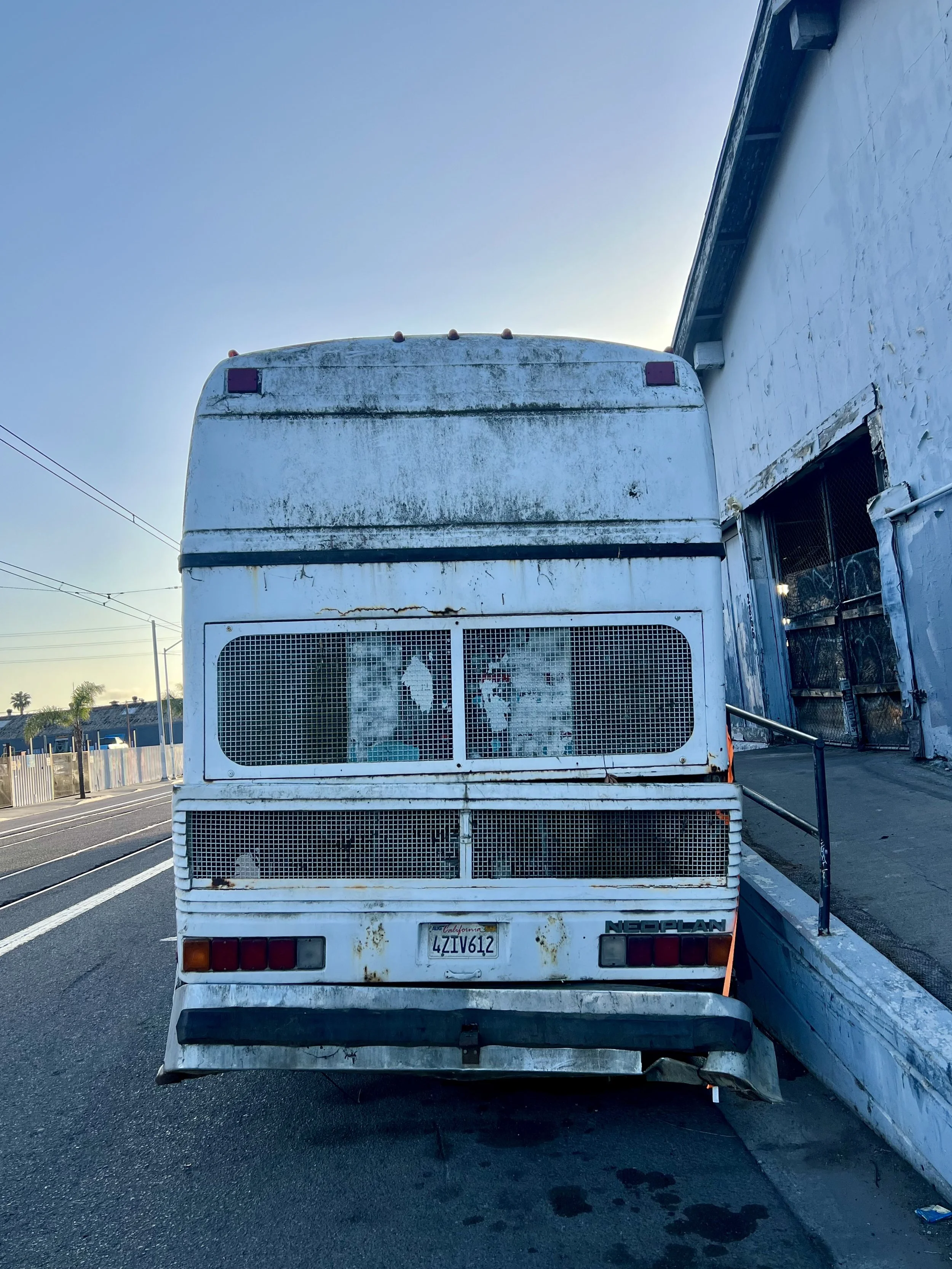
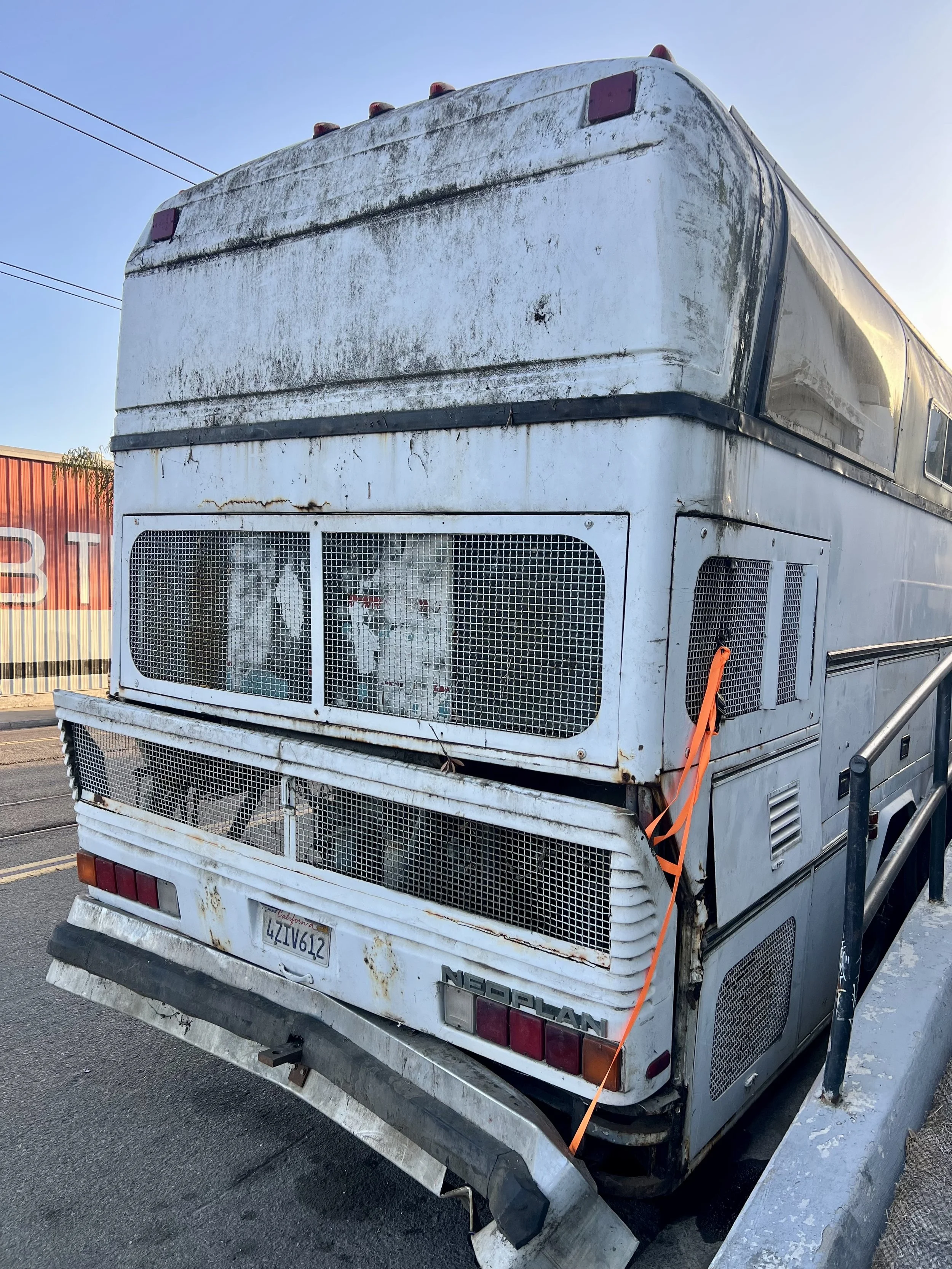
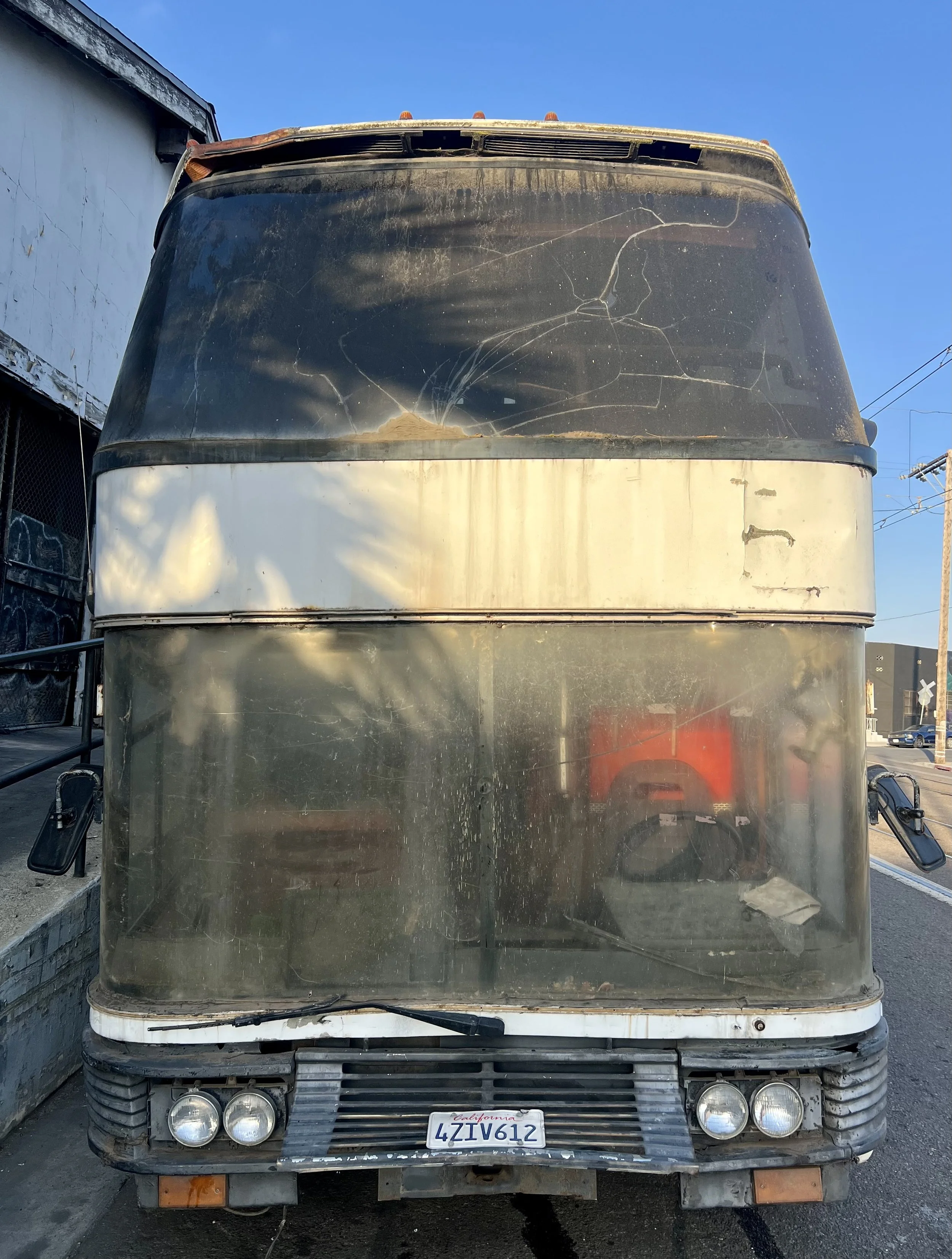
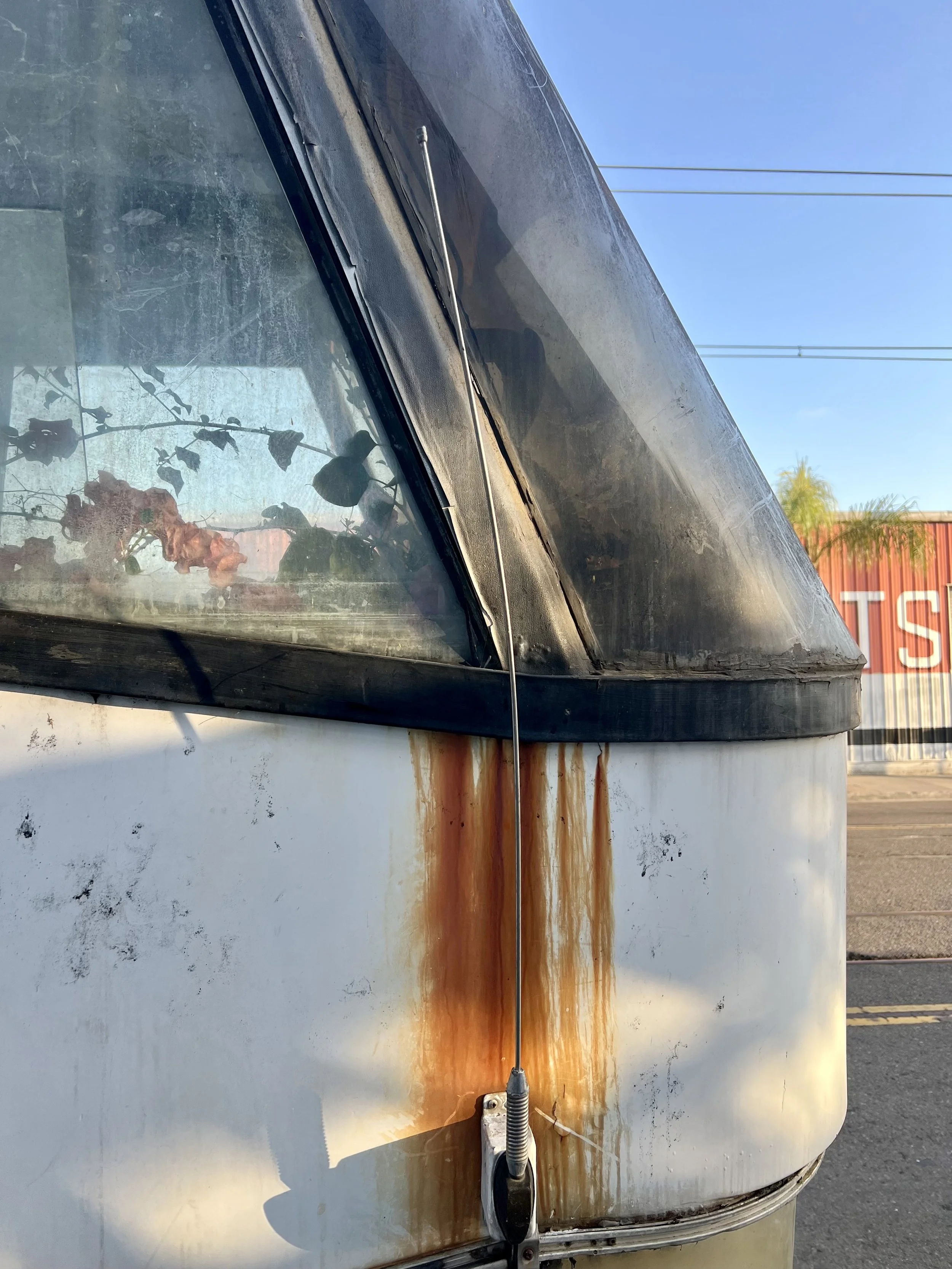
One night, the silhouette of a gargantuan bus illuminated by a flickering street light emerged from the mist. I couldn’t believe my eyes. There it was, parked on the curb in front of a derelict recycling center just outside of Downtown San Diego. After screeching my car to a halt and ducking into the shadows, I stepped out to absorb the undeniable presence of the vehicle towering over me. Some people say, “take a picture, it will last longer,” with a negative connotation. However, in this case, it’s the first quote that came to mind when witnessing this marvelous vintage coach likely awaiting destruction. This time, I recited the adage in my head with a warm sense of preservation before snapping pictures.
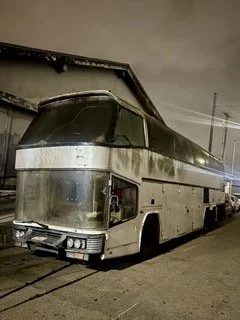
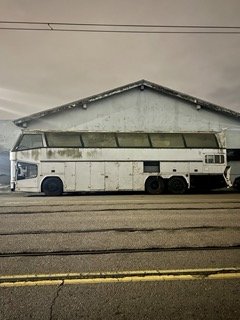
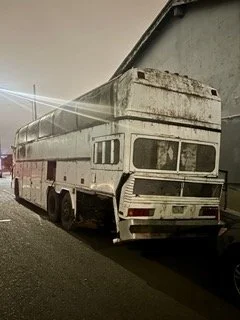
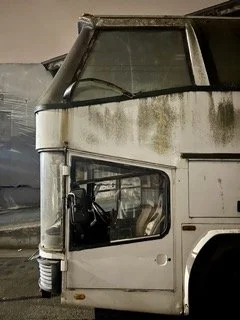
Sometimes when I stumble across a seemingly doomed automobile, I wonder if I should celebrate its cracking tires, rust holes, and overgrowth; because in some cases, those very details make for the most striking and unforgettable photos. Of course, I’d love to see a rare time capsule idling at a stoplight, but the untold story of one succumbing to the elements right before my eyes is captivating in a way I can’t ignore. Oftentimes it becomes challenging to dig up the history of a soon to be forgotten automobile spotted in the wild. You could poke around your center console, looking for a receipt to unravel and scribble a note on, then slip it between the dust-coated windshield and disintegrating wiper blade, hoping someone will discover it and give you a call. However other times, as I would soon discover with this double decker coach, unraveling a rich history would be possible after some digging.
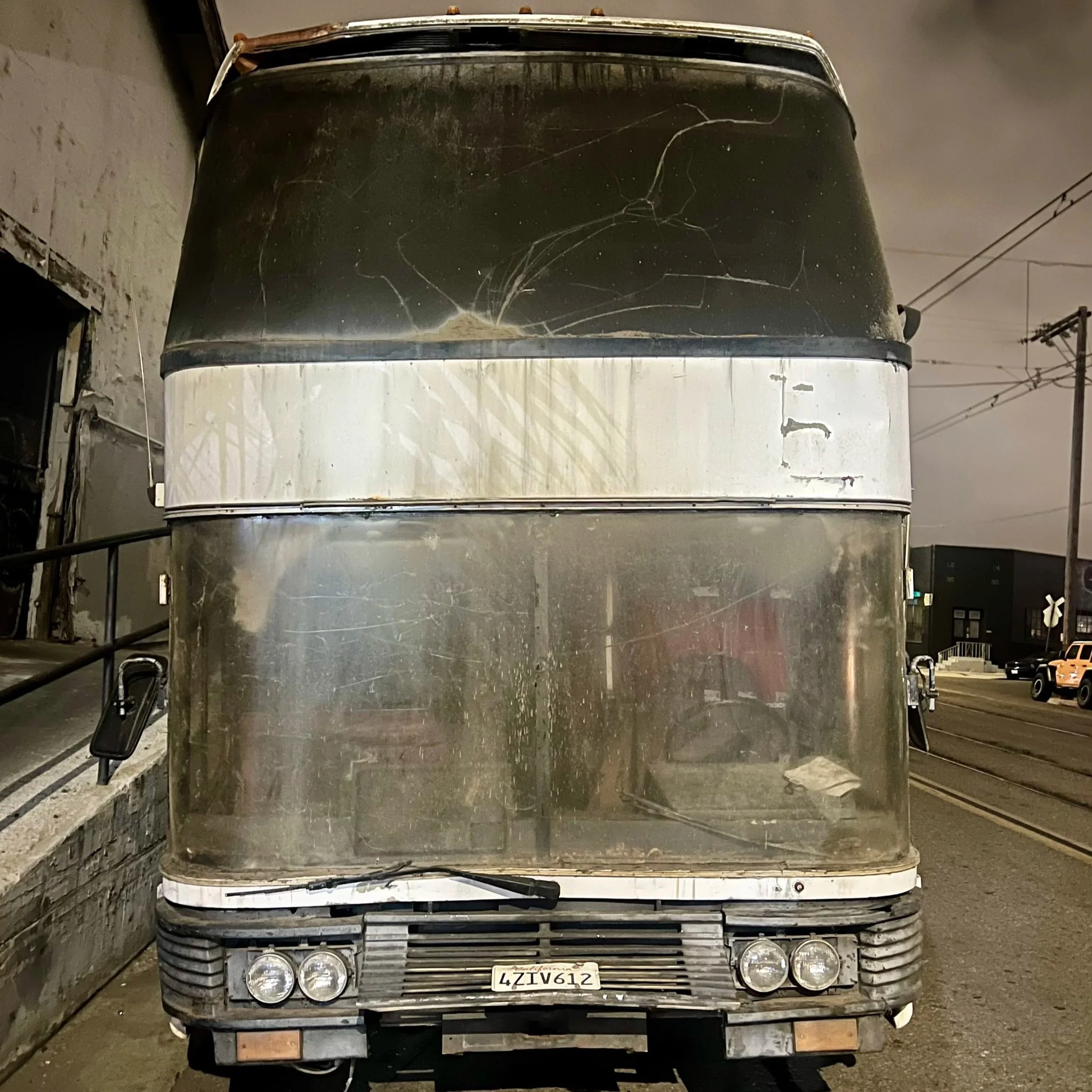
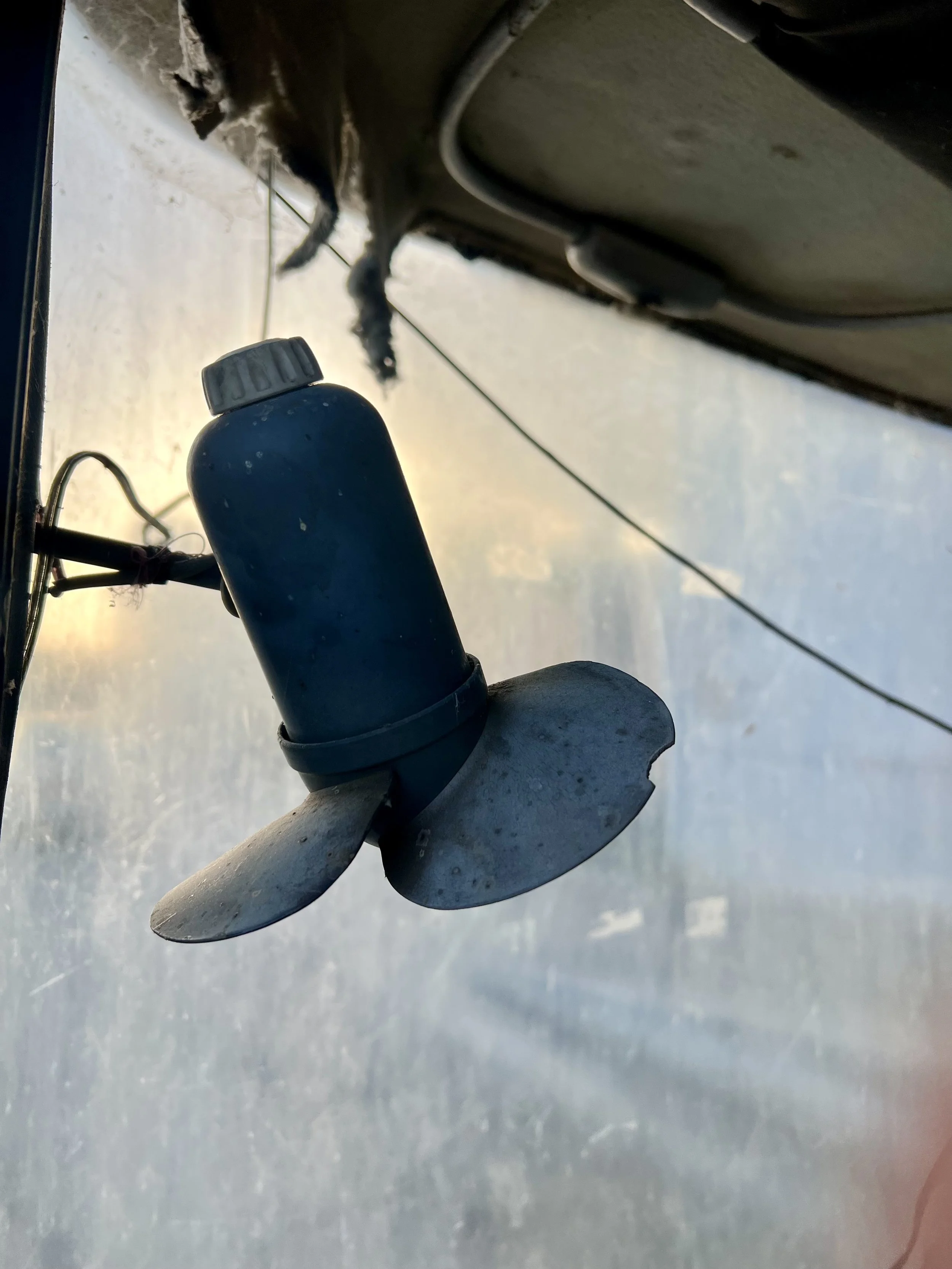
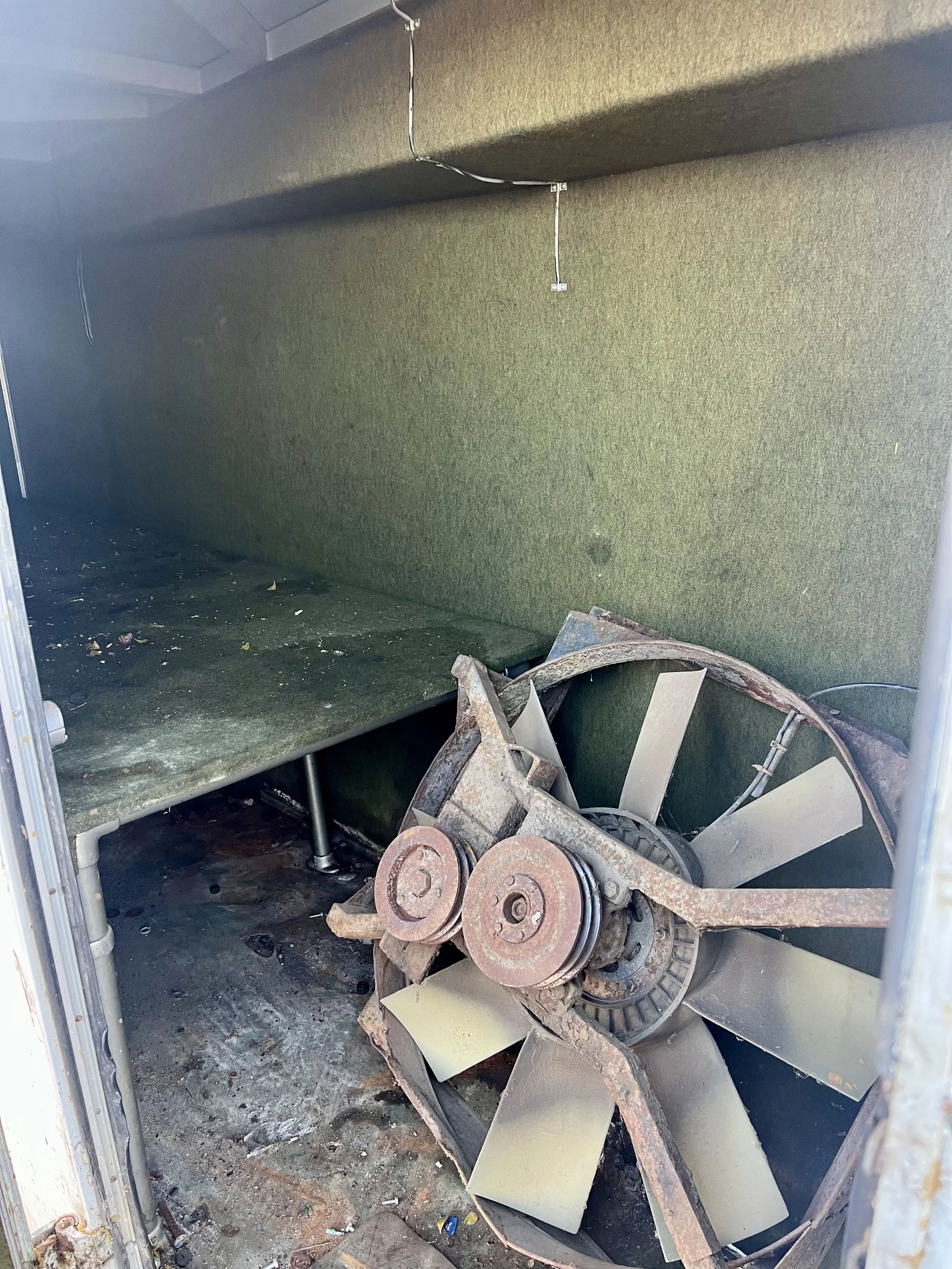
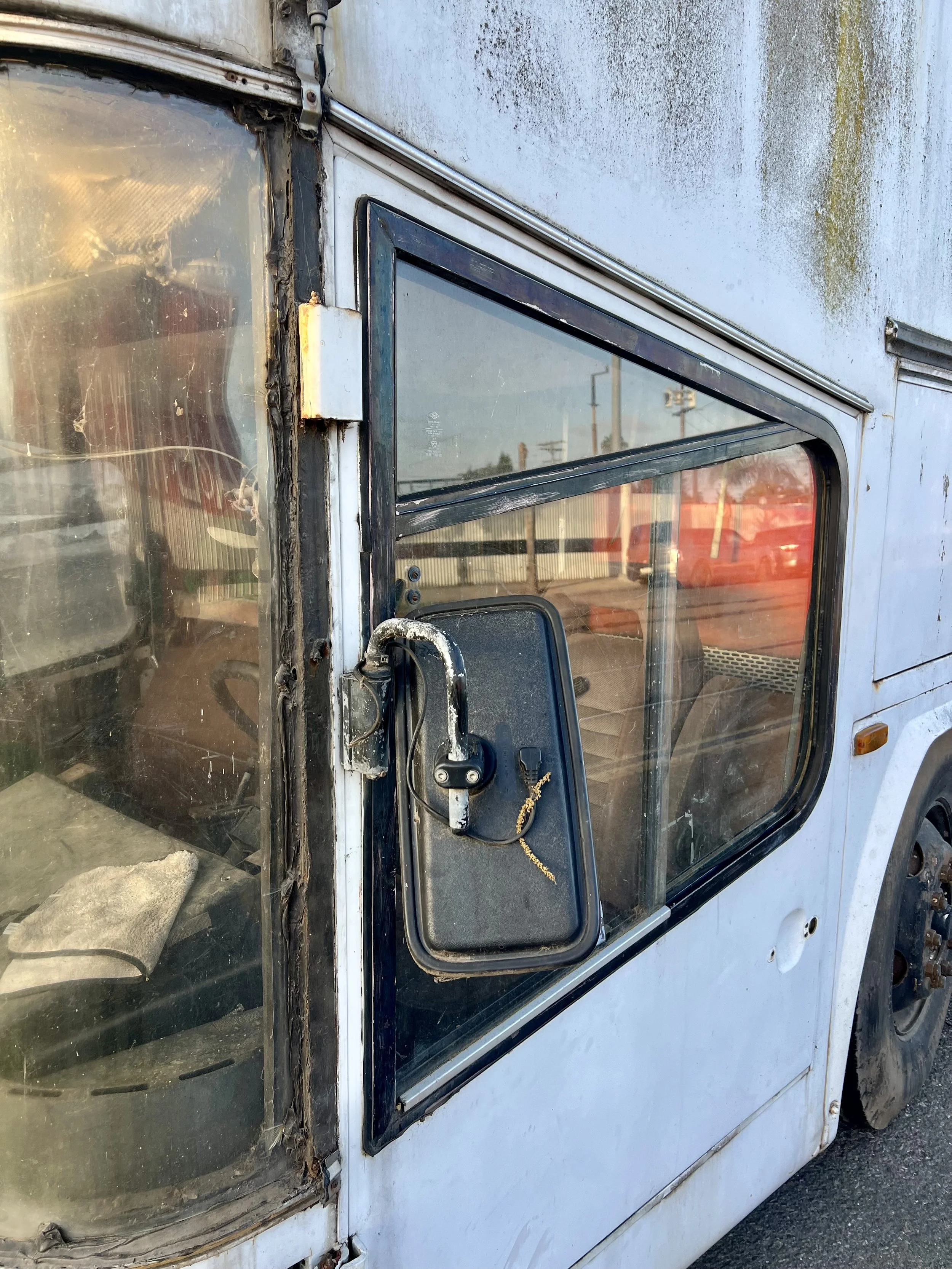
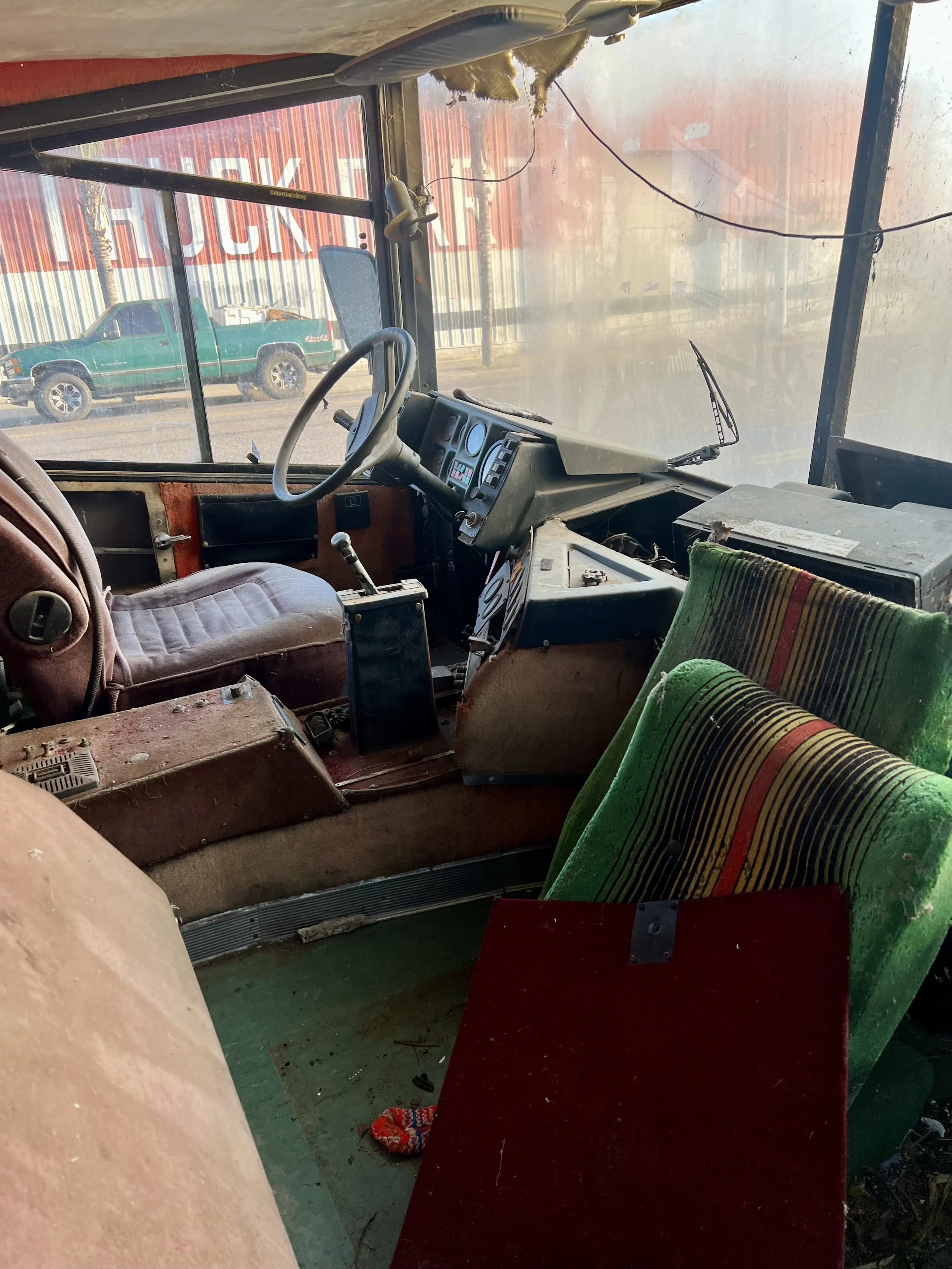
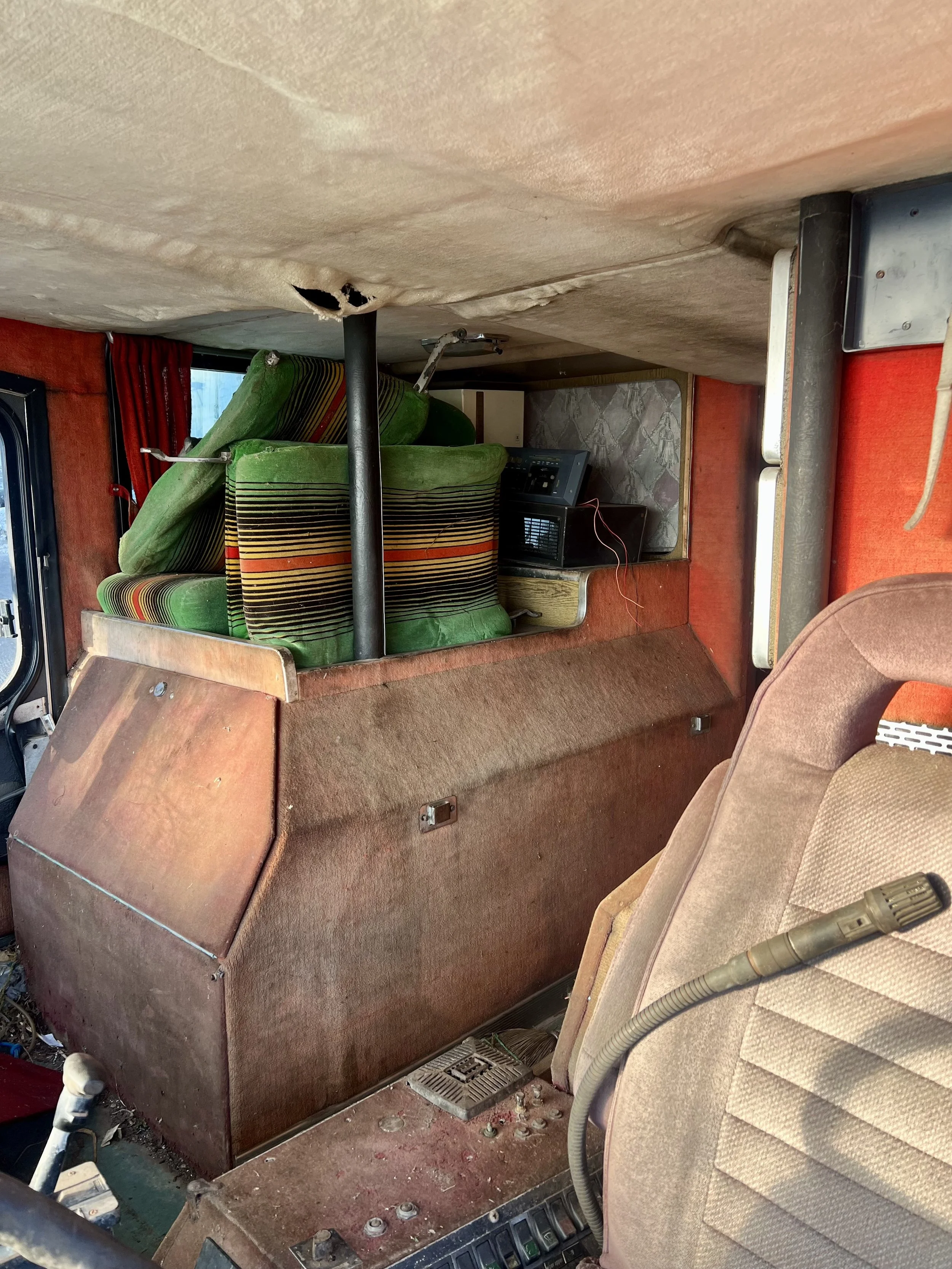
I had many theories, but one thing was clear: the end was looming. I stuck my head inside the window and was greeted not so kindly by the stench of decay. As if the setting didn’t speak to the future of the coach on its own, the ecosystem that had formed inside it certainly did. In photos, this gargantuan coach looks like something worth saving, and any enthusiast would argue as much. But walking around it in person, it quickly became clear it was beyond the point of no return. Much like when I initially discovered the coach in local classifieds, I pulled out my phone just winks away from dozing off that night.
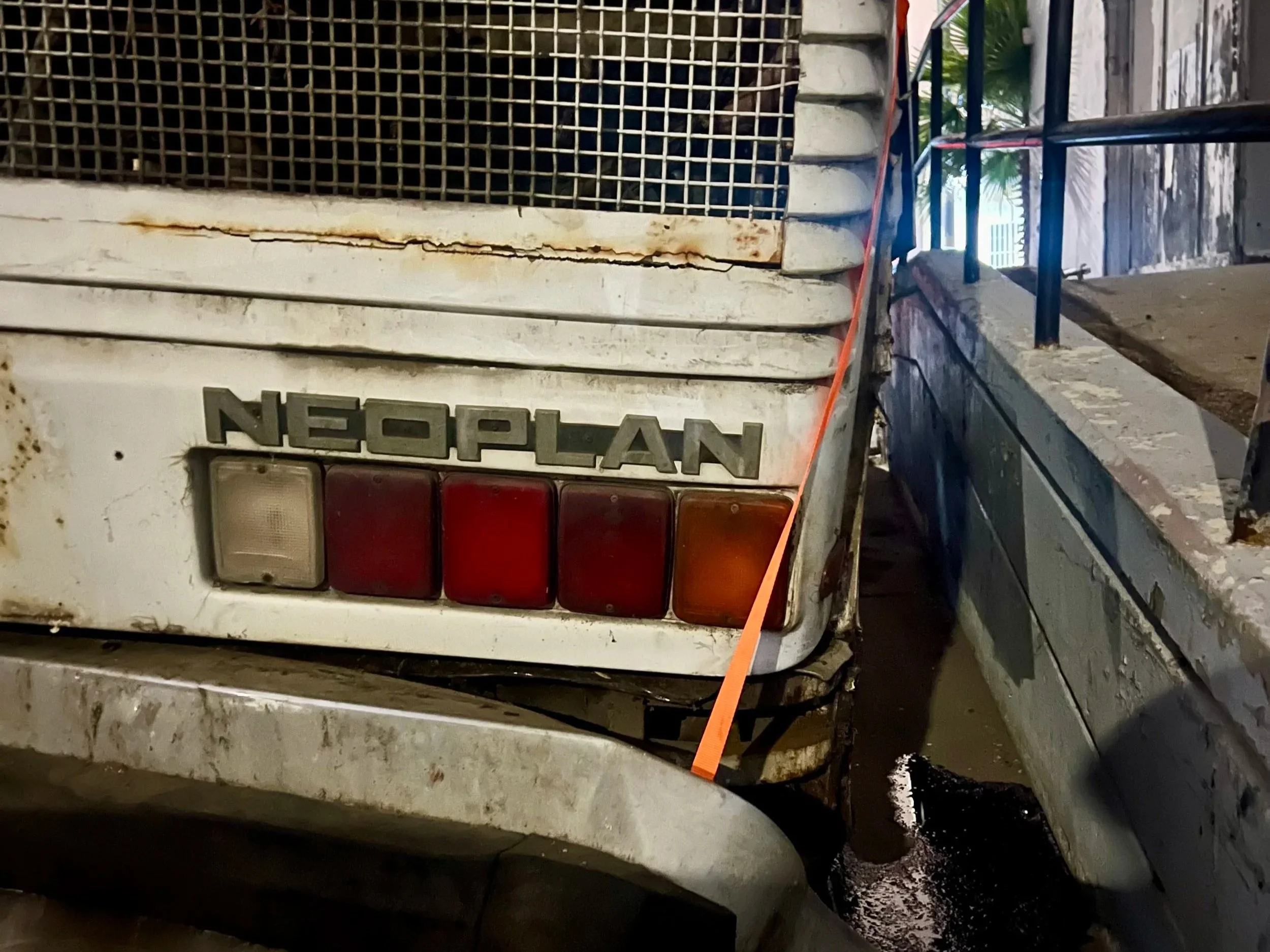
“NEOPLAN” appeared on the rear of the coach, and I managed to grab the VIN plate that night, which helped me conduct research, yet I struggled to find any specific information on the exact coach I had encountered. It was evident that NEOPLAN was owned by MAN Truck and Bus. You know? The three bold letters you’ve seen in a viral clip of a truck, the kind that usually hauls a tractor-trailer, lifting a wheel while making a pass on a racetrack or climbing over Mars-like terrain? Before hitting the hay, I took what I thought was a shot in the dark, sending MAN Truck and Bus a message on Instagram and sharing my discovery as a last-ditch effort to piece together the coach’s past life.
Though I’m ashamed to admit it, the next morning started like any other: lifting my head and reaching for my phone. This time, however, I was greeted by a warm reply from MAN Truck and Bus. “Thank you very much for sharing your discovery — we truly appreciate your interest in preserving the history of this NEOPLAN coach,” followed by a request for additional information to determine the origins of the exact coach I saw. It would not be long before I received another message sharing original delivery photos, a brief history, and a contact who could shed more light on the life of the coach.
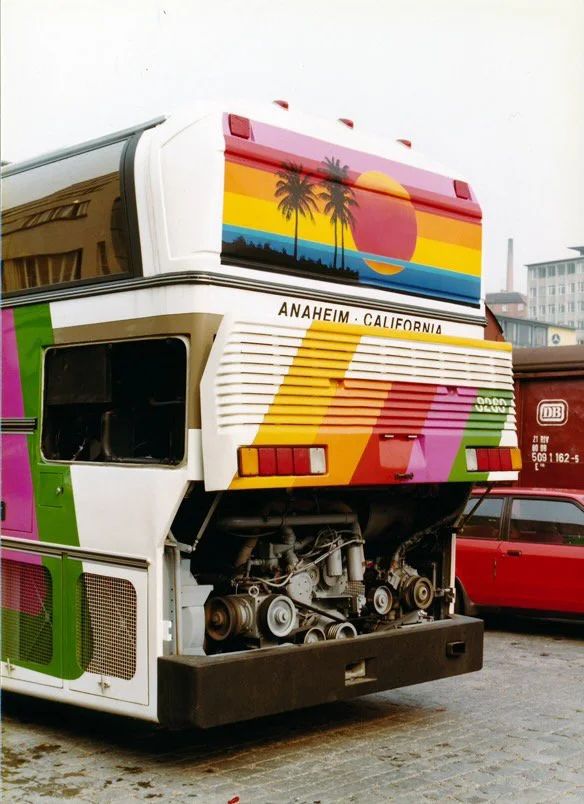
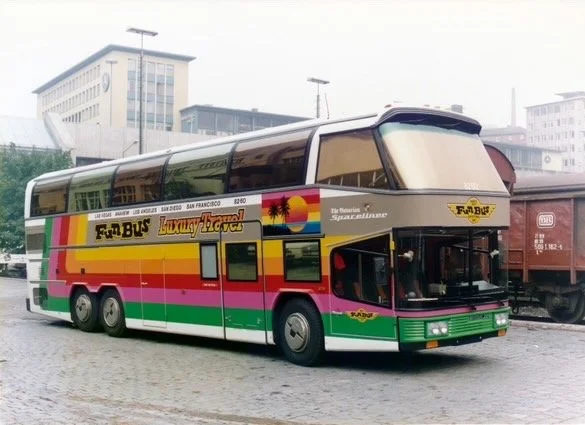
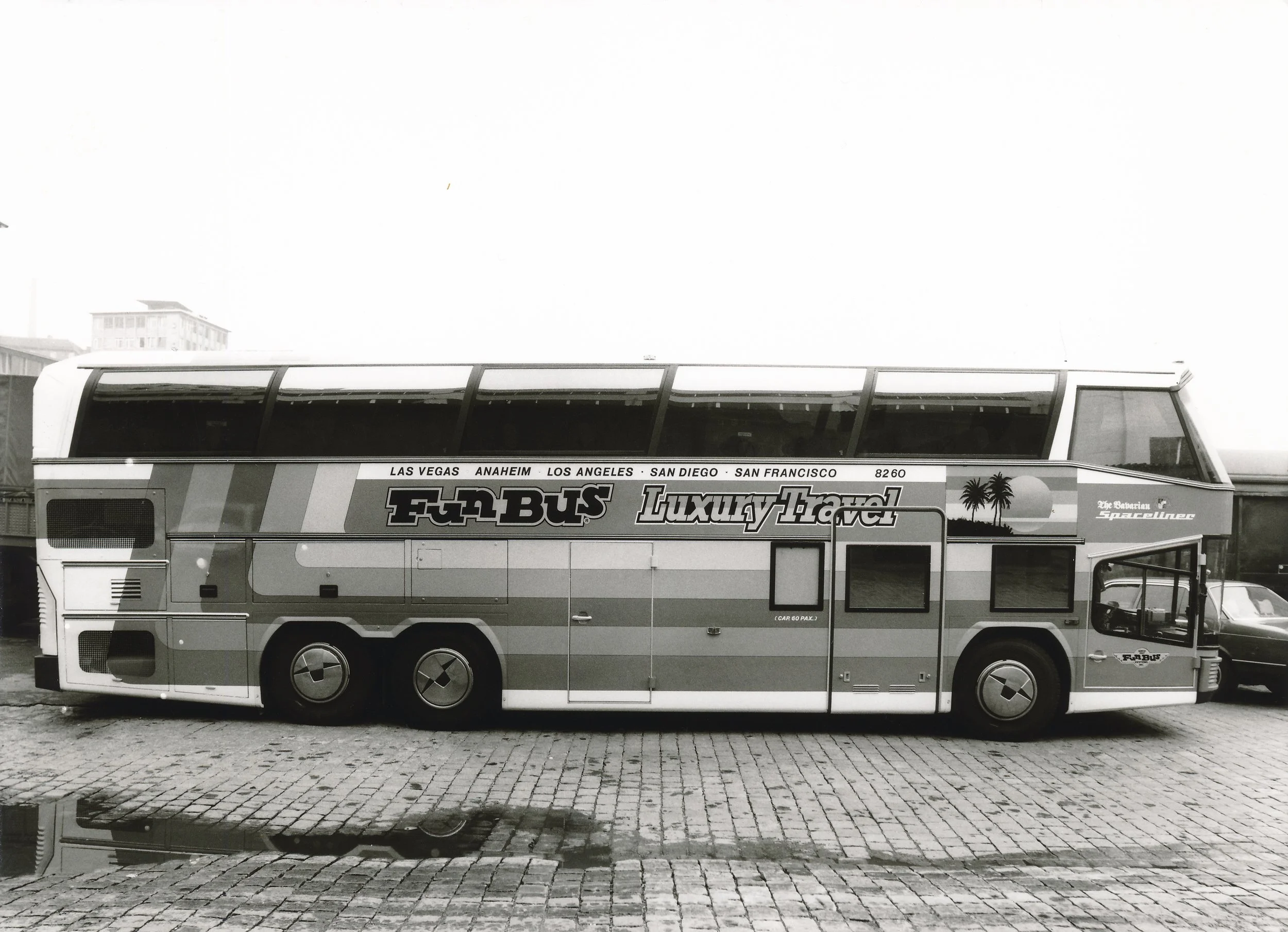
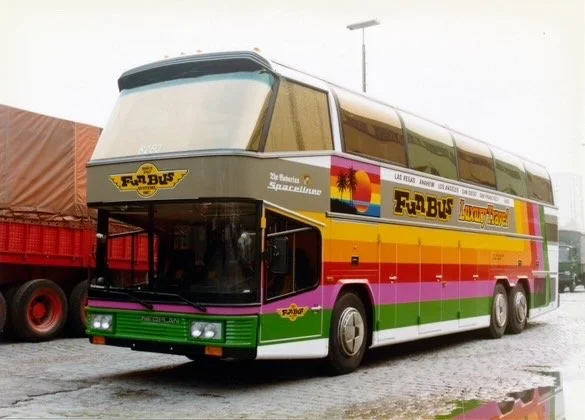
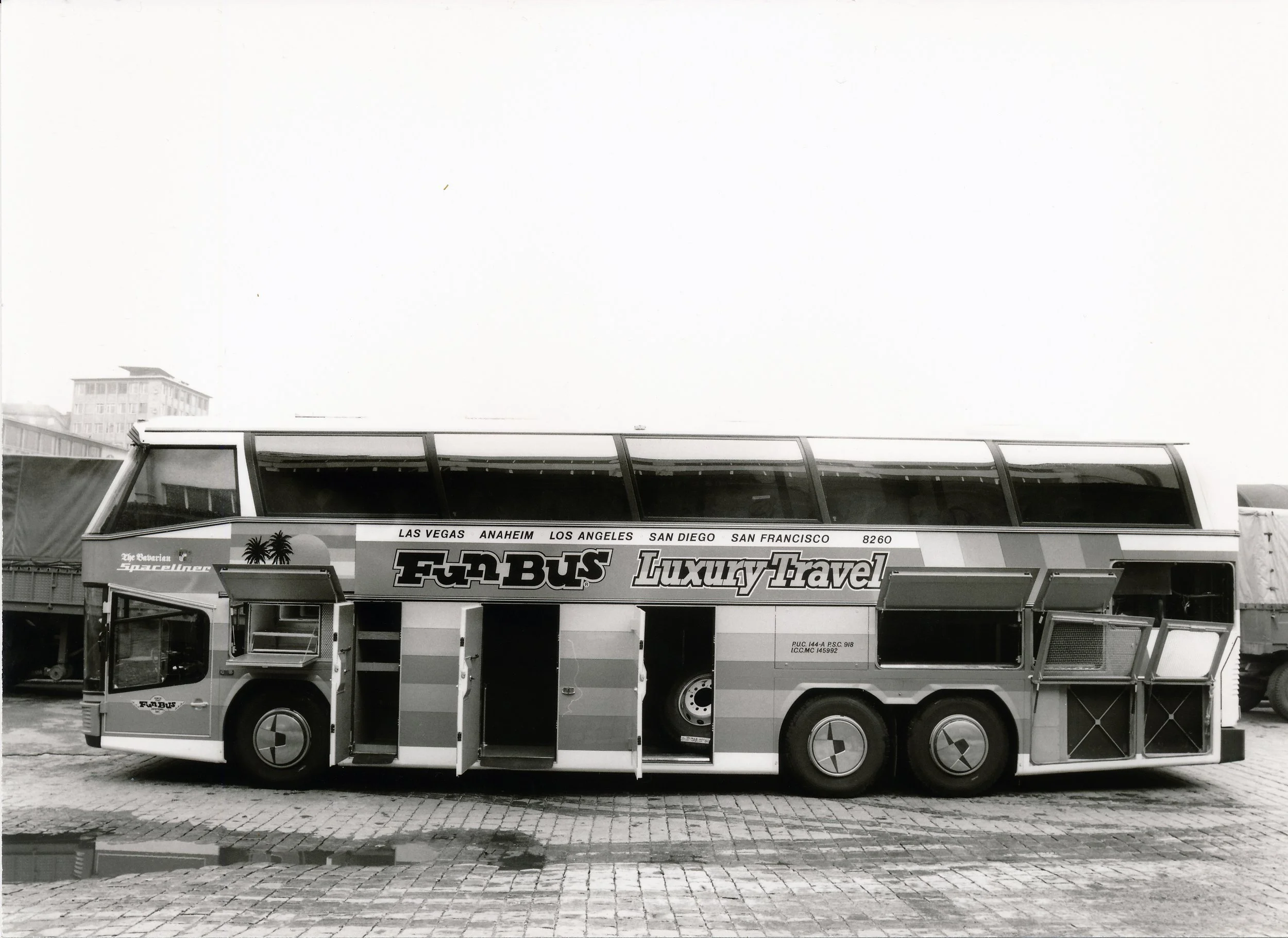
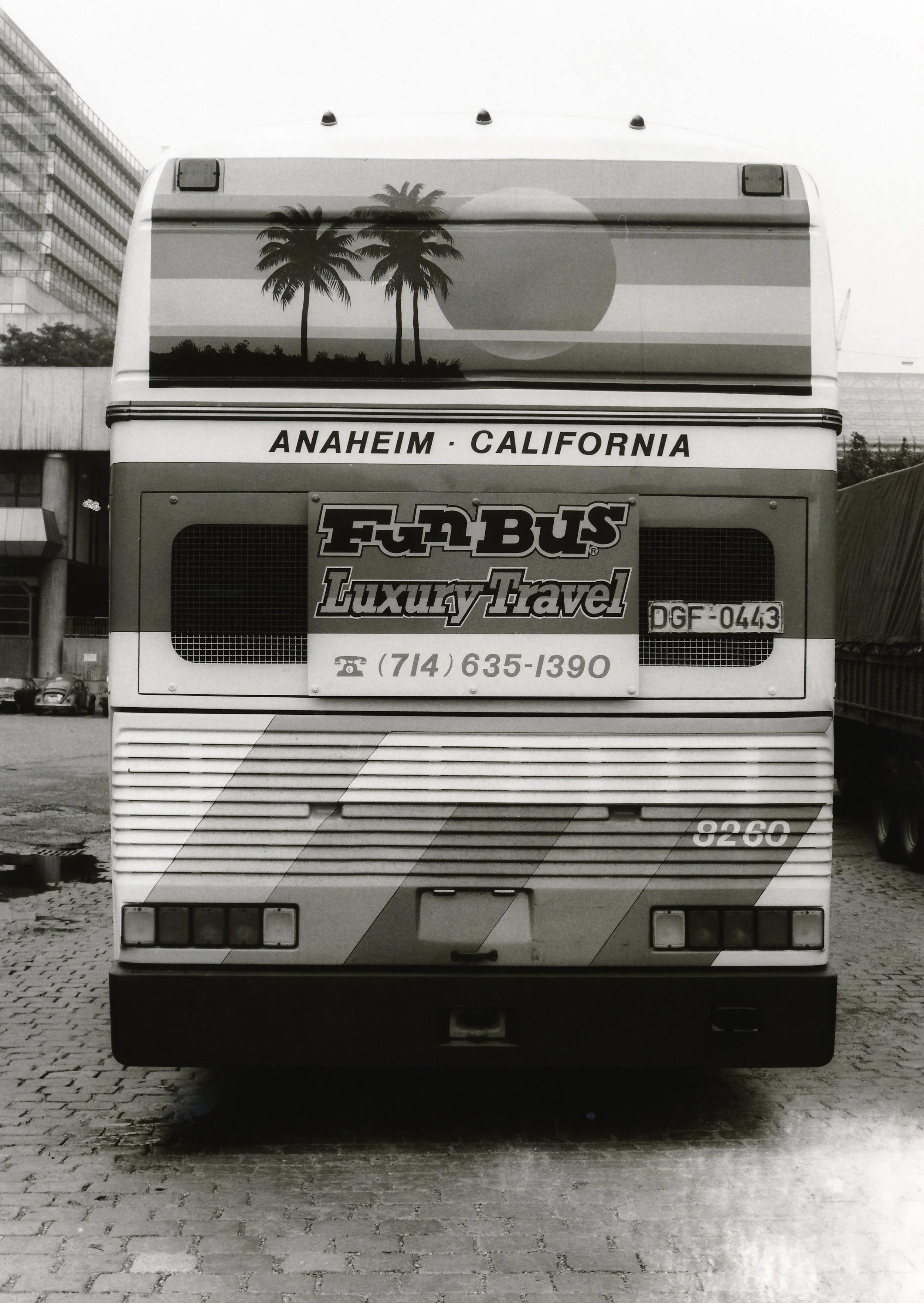
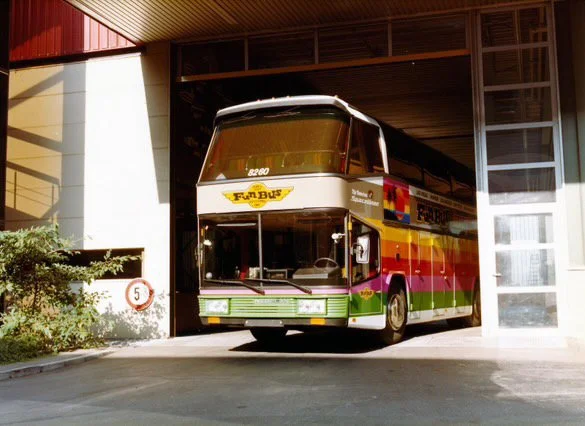
This 1982 NEOPLAN Spaceliner was the first of two custom coaches delivered to Funbus in Los Angeles—one of NEOPLAN’s first private customers in the United States—and possibly the key vehicle that triggered NEOPLAN’s success with high-decker coaches in the USA. “Customer requests were implemented comprehensively, even if they seemed exotic,” says NEOPLAN Expert Andreas Schneider, who I had the pleasure of connecting with over this discovery. Rather than simply distributing European buses in the US, they developed bespoke models specifically for the American market, using largely American components—an approach that proved successful.
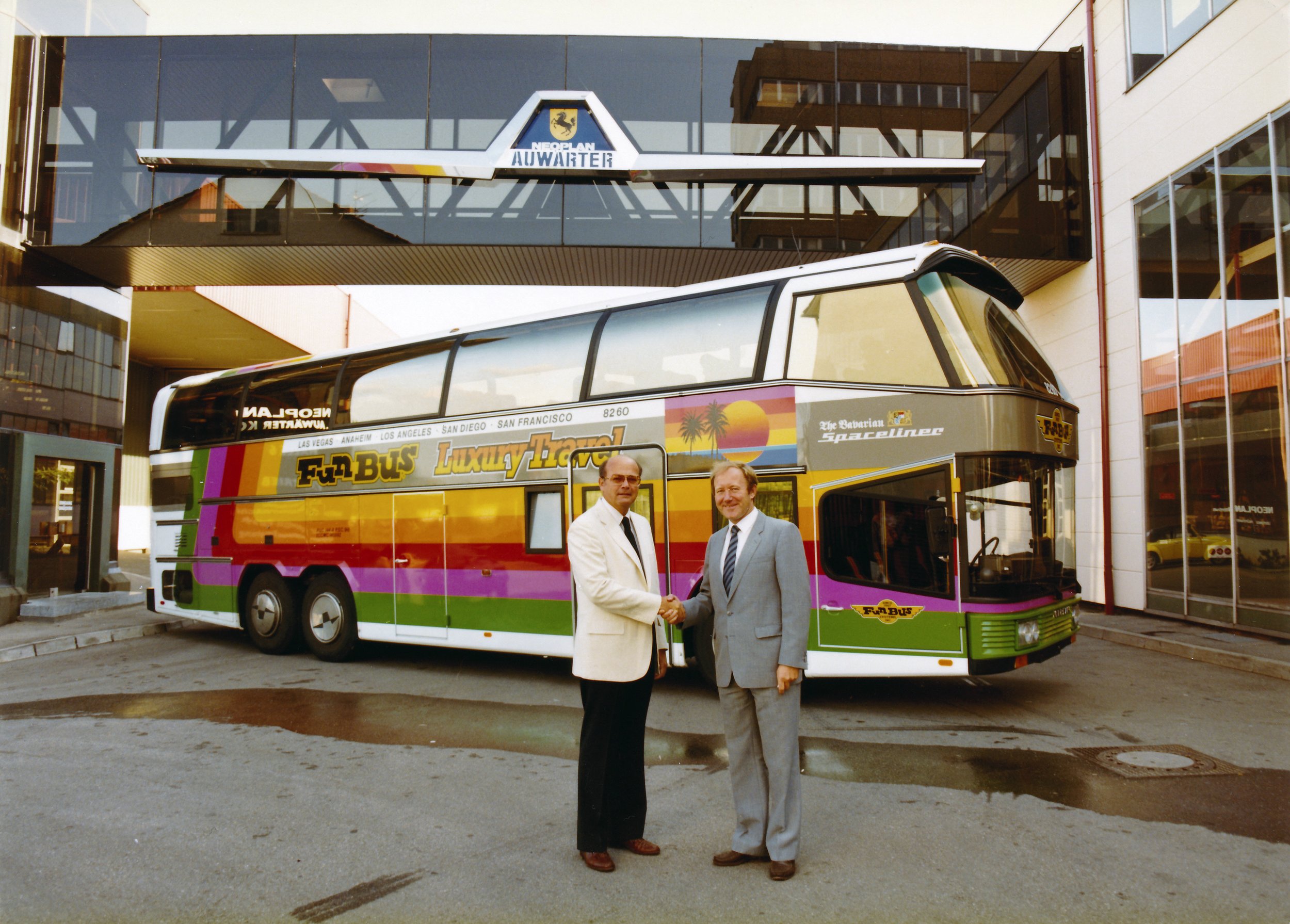
Image: Original delivery photo of this exact coach, picturing the Funbus customer on the left, and Pilsting plant Manager, Konrad Auwärter. Bavaria 1982
In search of additional information, Schneider reached out to Konrad Auwärter, manager of the Pilsting plant in 1982 in Bavaria where this very bus was built, and the son of NEOPLAN’s founder. He’s now 84 years old and remains highly active in the vintage bus scene. Auwärter shared some additional information on NEOPLAN’s early relationship with Funbus, and more details about each of the two custom Spaceliner coaches built for the company between 1982 and 1984. He says, “Looking back, I’m actually surprised that we never properly publicized the delivery of the first Spaceliner. It was a really great story. By contrast, the second Spaceliner received considerable media coverage thanks to its appearance at the AMI exhibition in 1984.” Well, Konrad, my aim is to immortalize the first Spaceliner with my coverage, even if it is 44 years later.
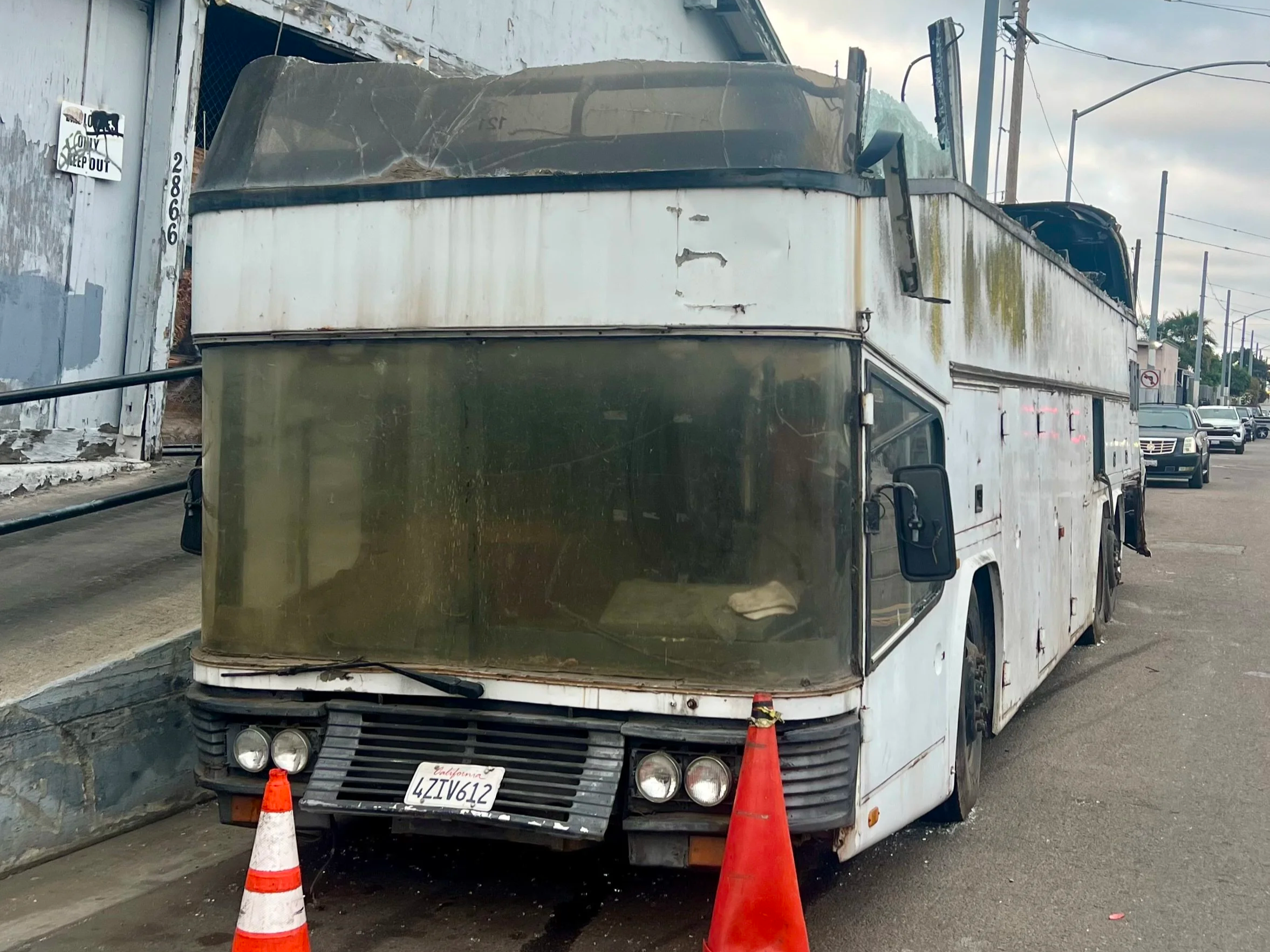
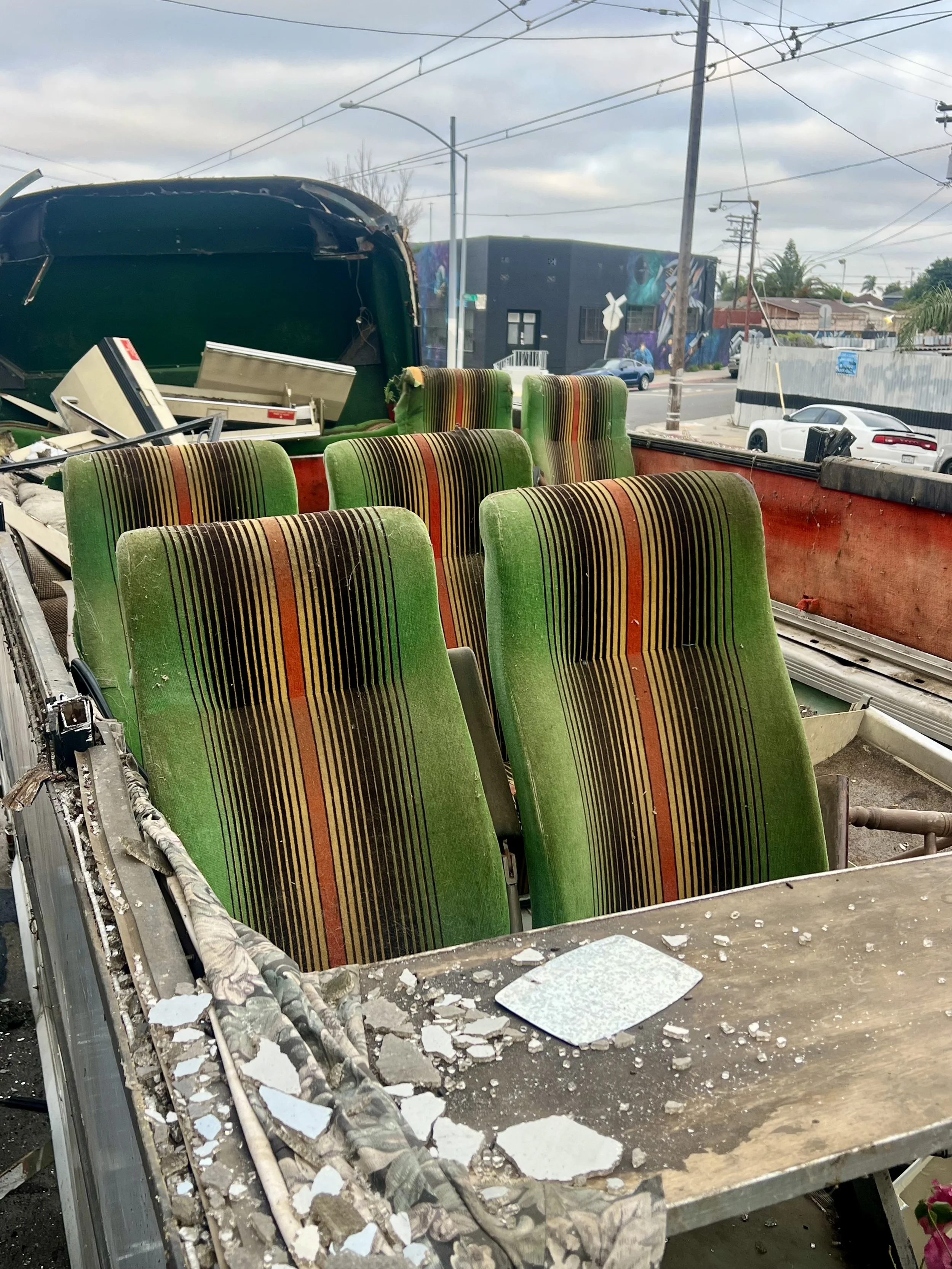
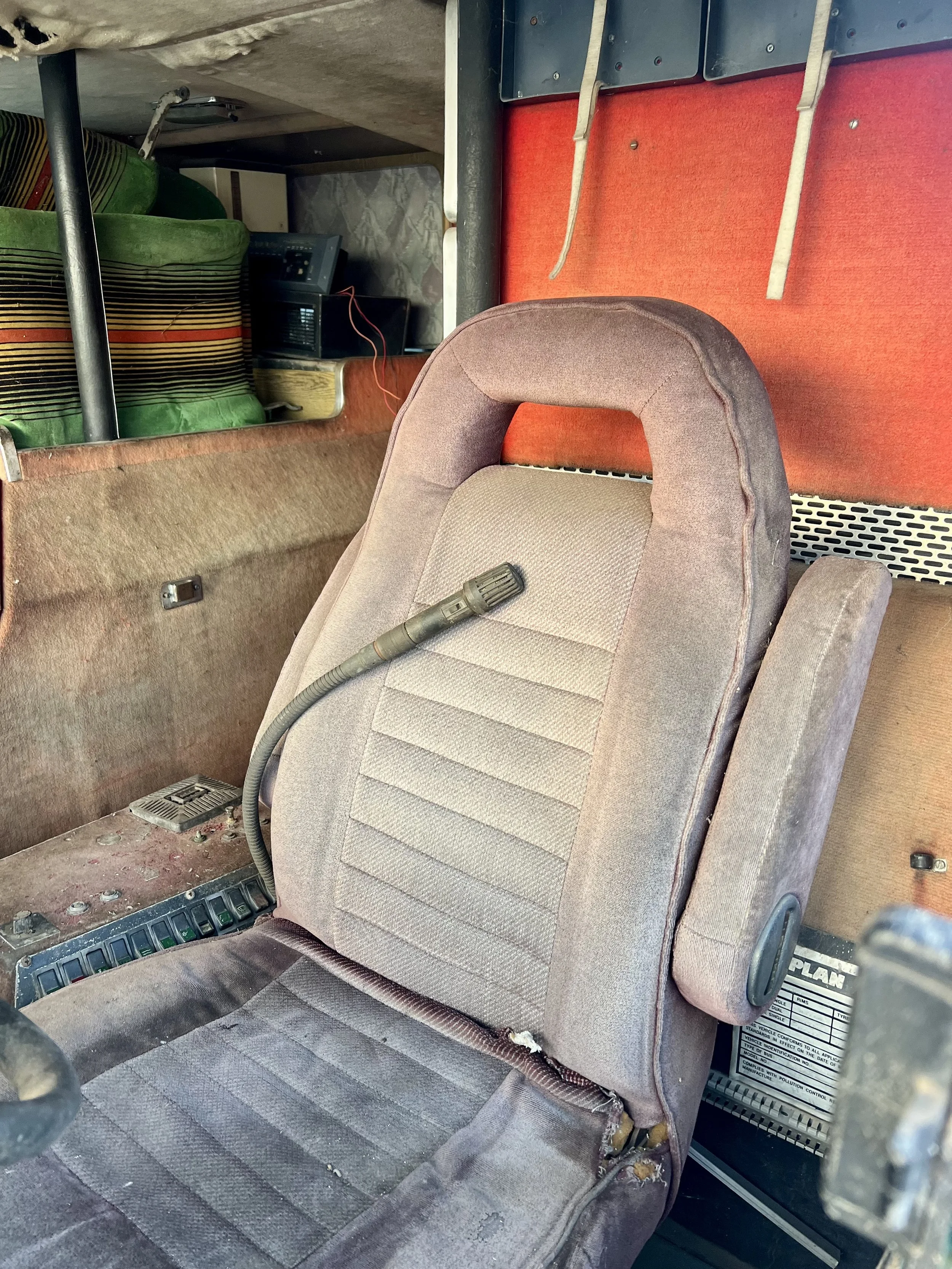
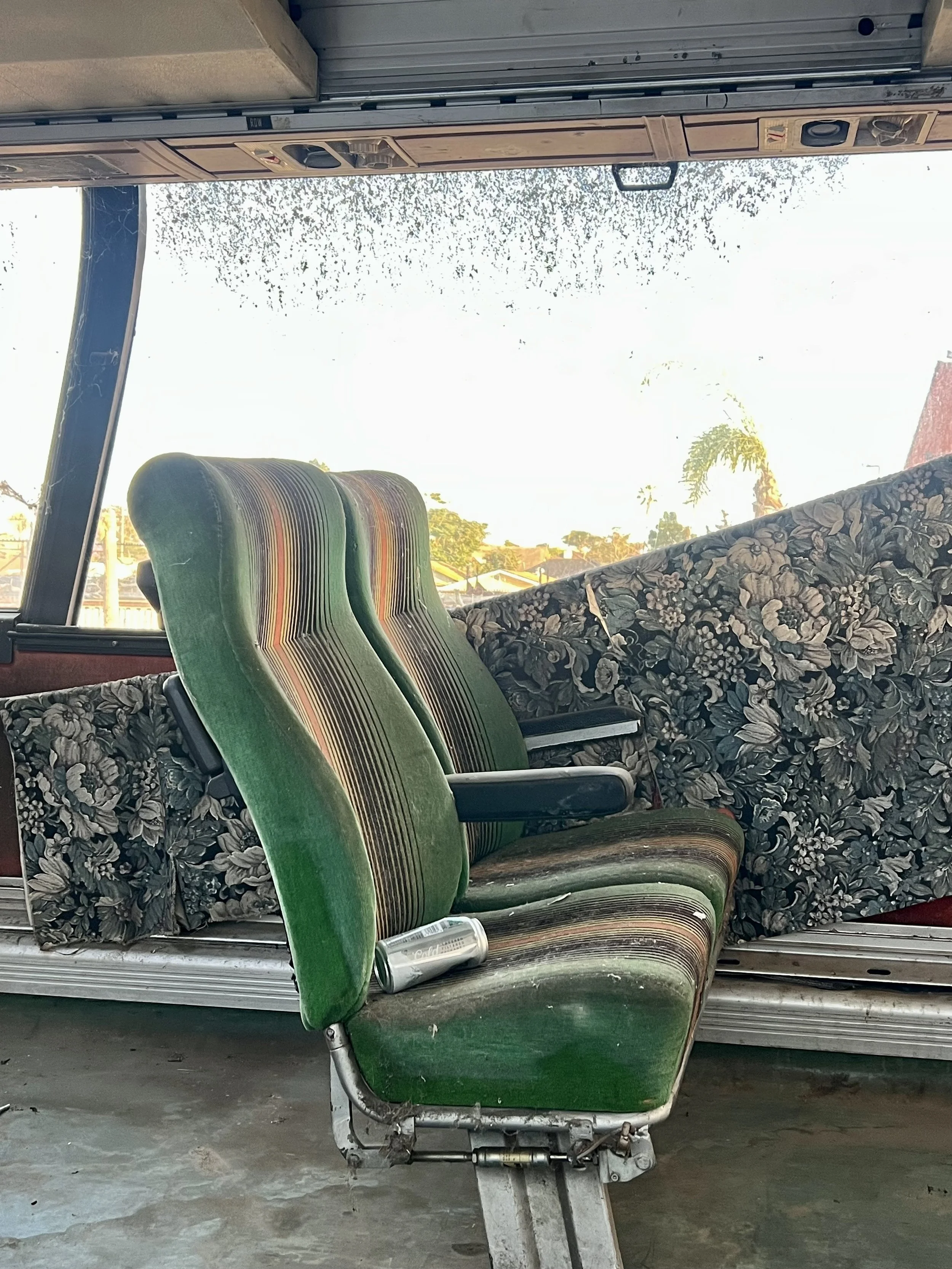
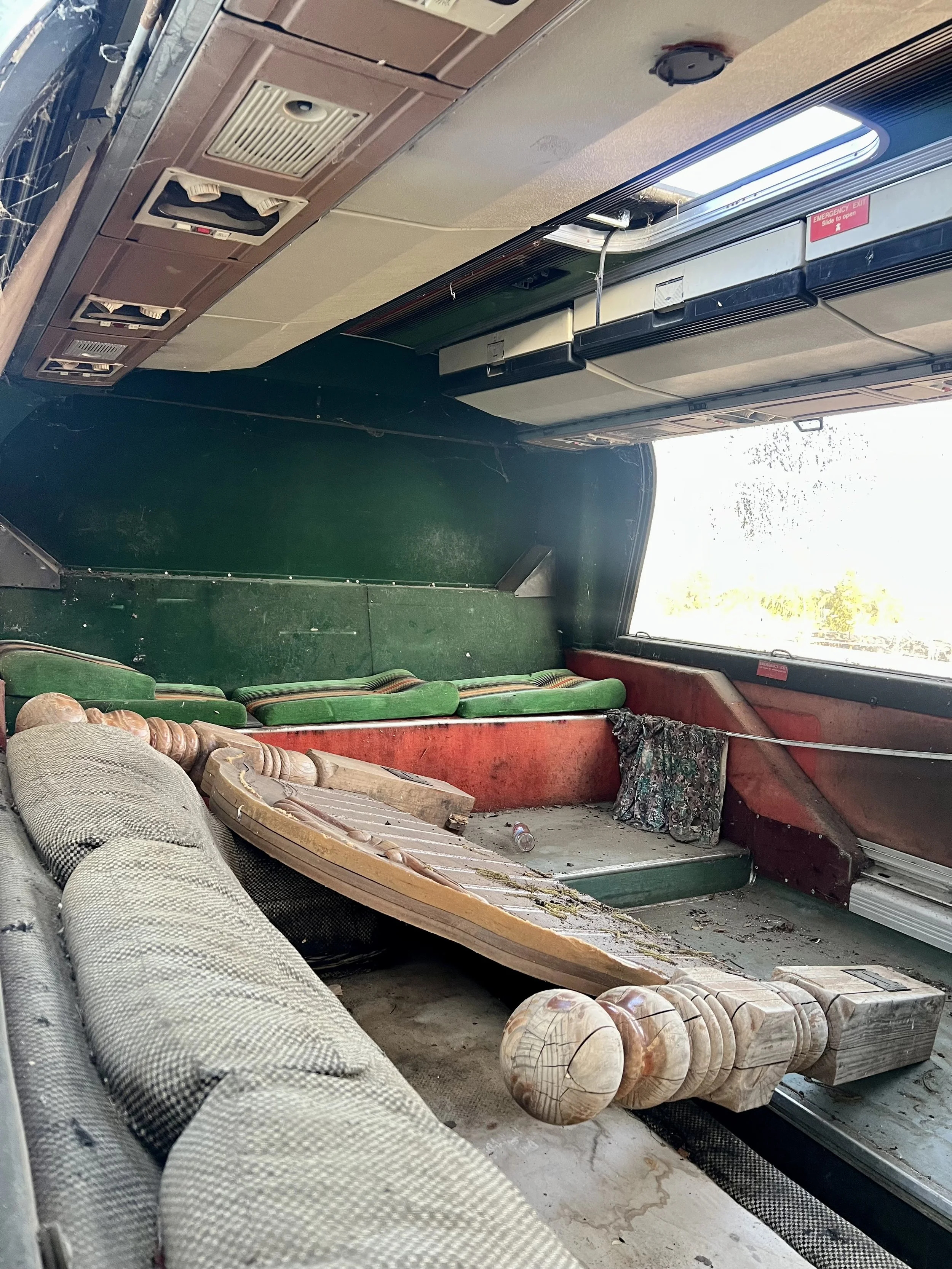
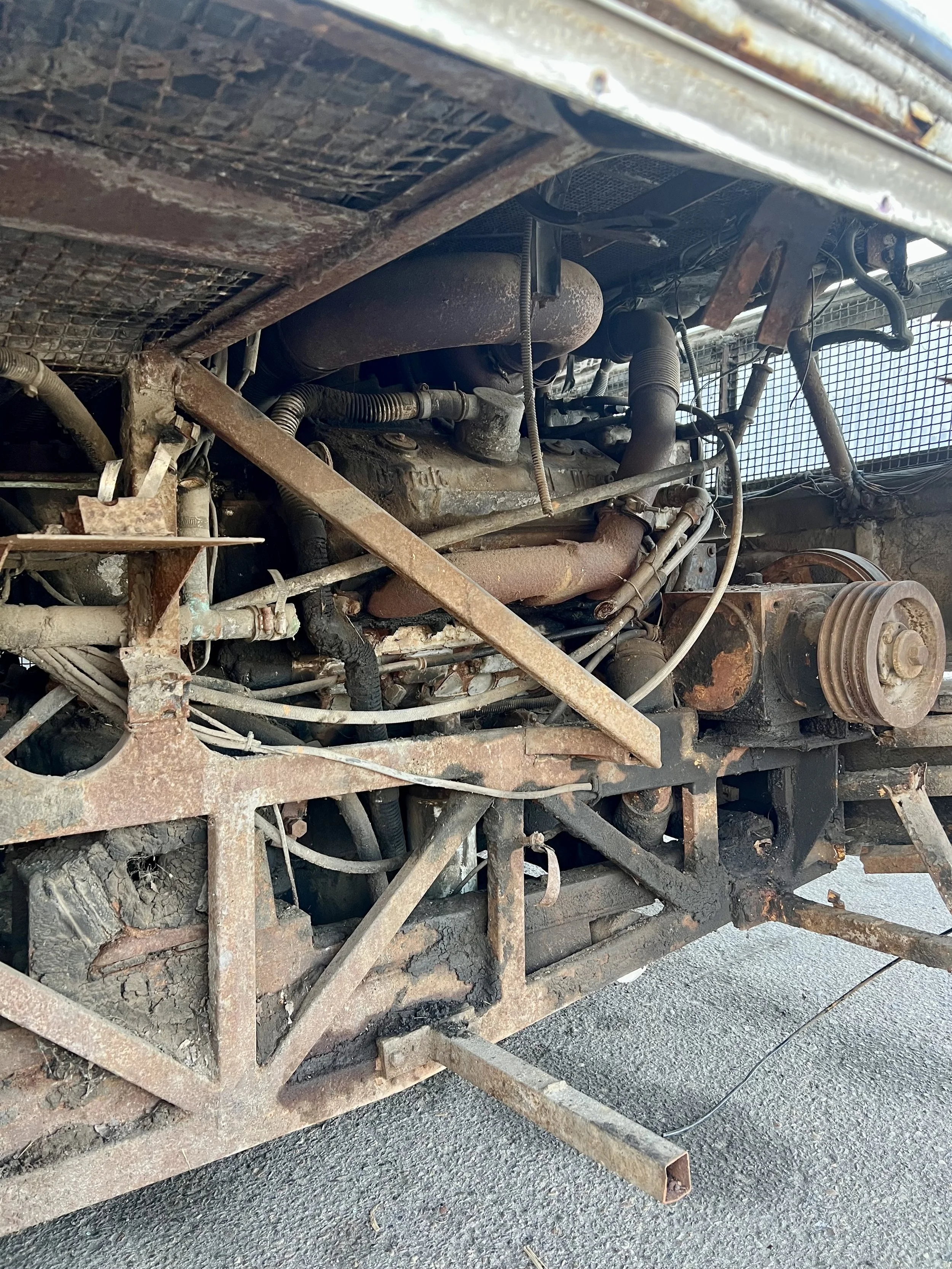
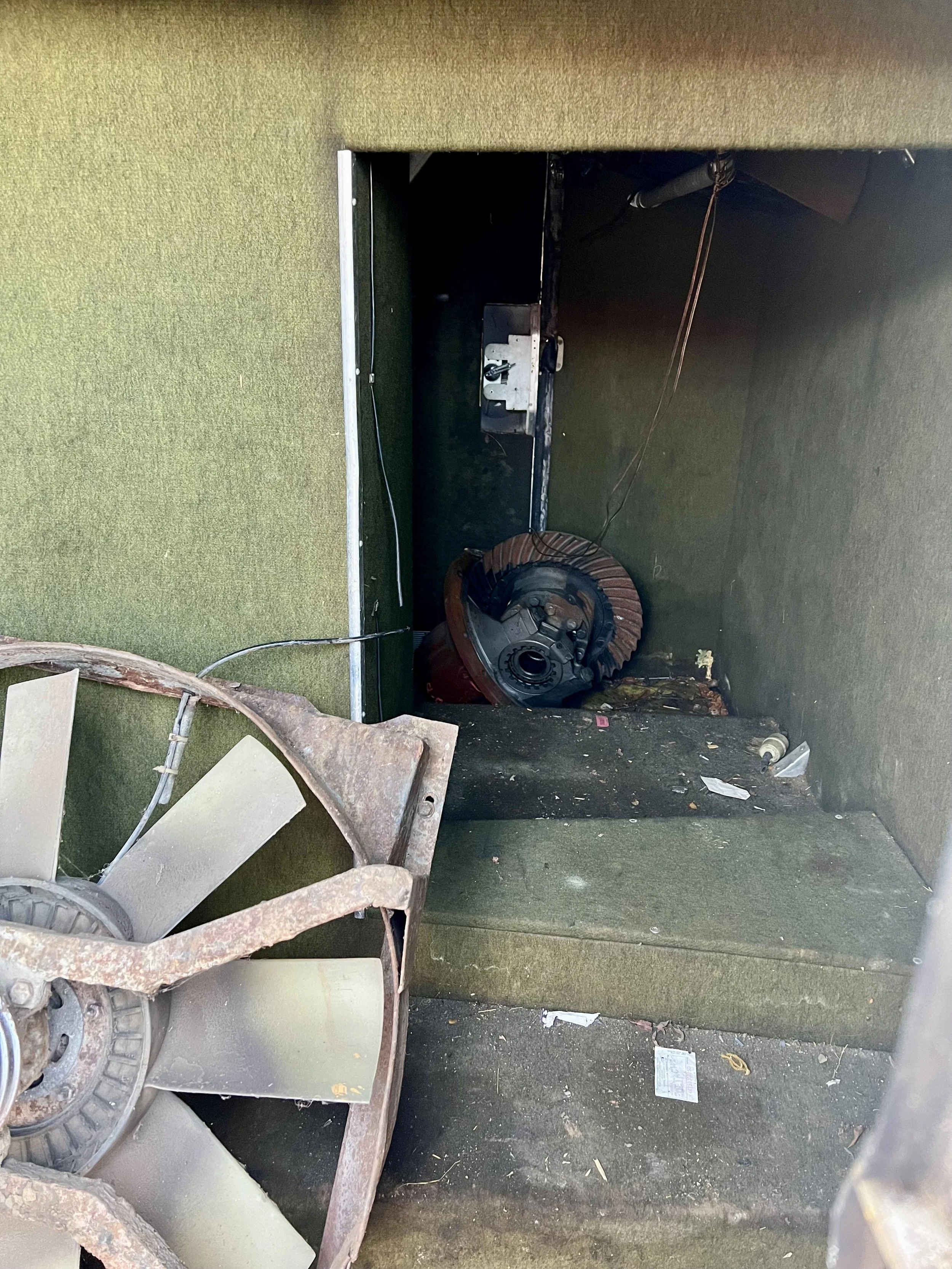
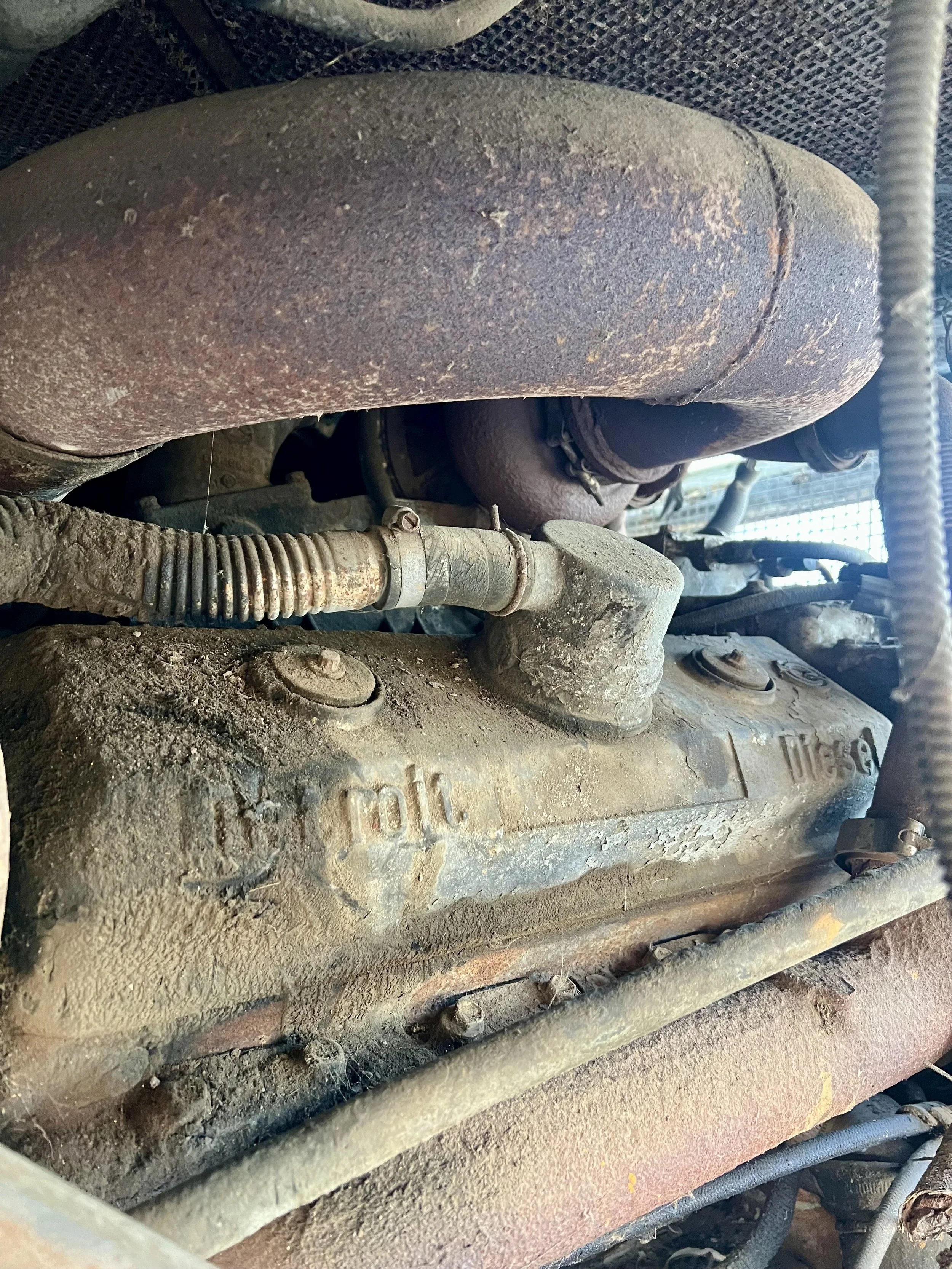
The discovery lingered in my thoughts long after I had left, and the next morning I was compelled to return, hopeful that daylight would uncover the finer details that the cover of night had kept hidden. The first thing that caught my attention was the massive Detroit Diesel engine crammed into the rear compartment—identified by the rust-pitted letters on the valve covers—a detail that aligned perfectly with Schneider’s account of the coach being built around predominantly American components. By then, the entire roof had been lopped off, leaving the passenger compartment exposed to the elements. Inside sat rows of seats upholstered in the sort of colorful cloth upholstery that looked as though it came from an American bowling alley frozen in 1982. Days later, I drove past it once again, only to discover that the heart of the beast had been crudely carved out, leaving very little remaining.
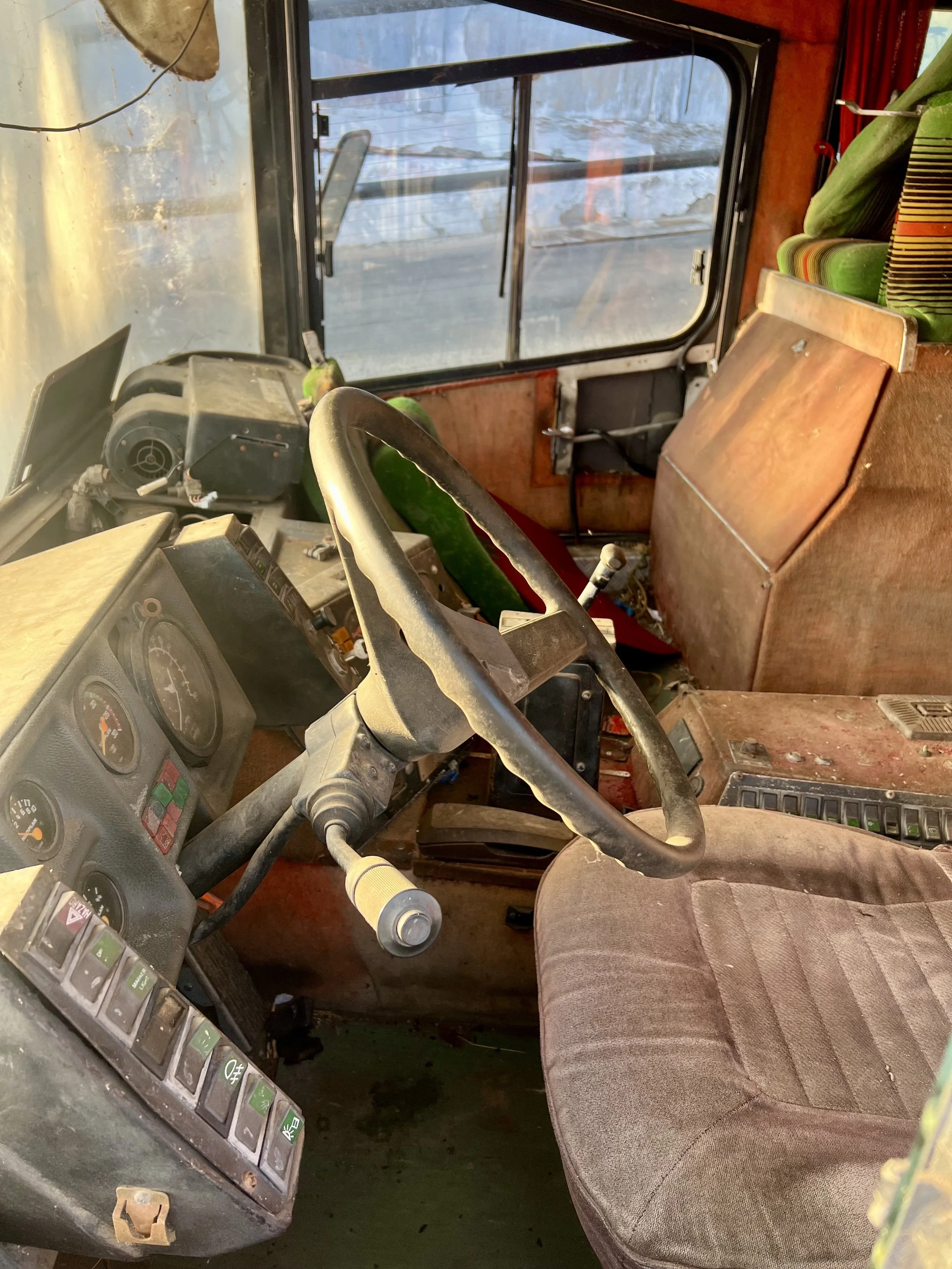
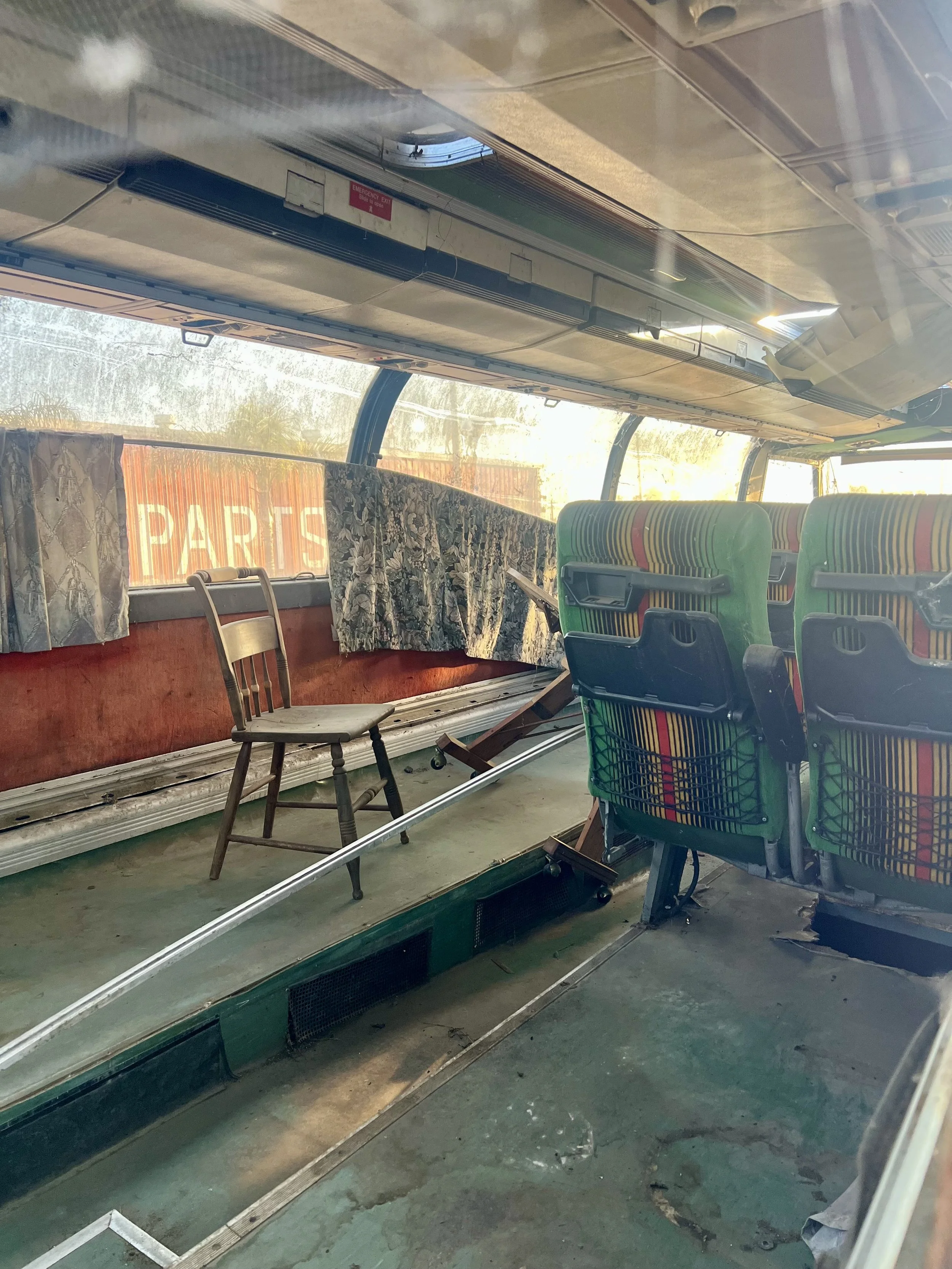
One day, it simply wasn’t there anymore. So many vehicles with a rich history are scrapped anonymously, their life story vanishing the moment they meet the crusher. Had I simply taken a different route home that night, there would be no story to be told about one of NEOPLAN’s most significant American coaches. I never imagined in my wildest dreams that my late-night marketplace discovery would appear before me in this unforgettable setting, so perhaps every once in a while something good does in fact happen in the late night hours. The coach may have ended its life in a scrapyard, but at least its story won’t be melted down with it.